
Last updated November 18, 2026
 Hardwood
 Engineered hardwood
 Luxury vinyl plank
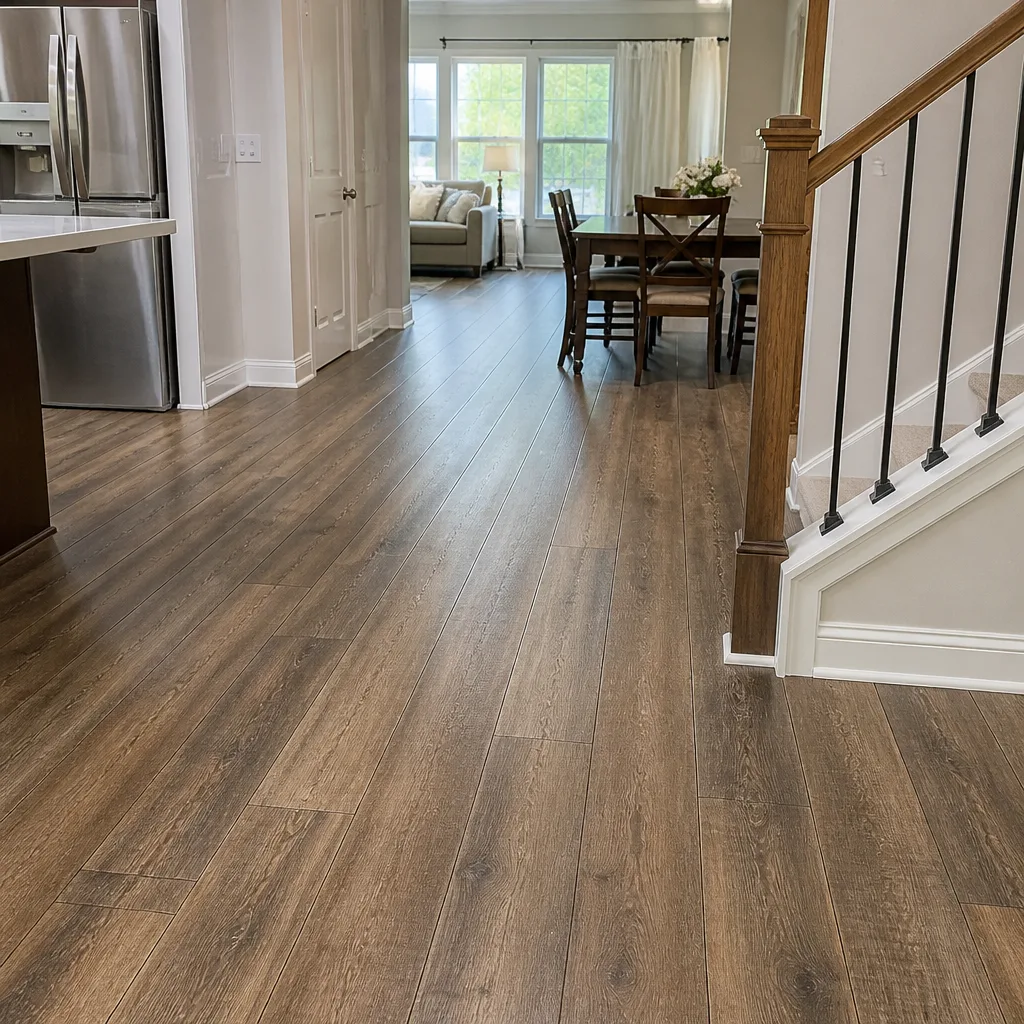 Laminate
 Porcelain tile
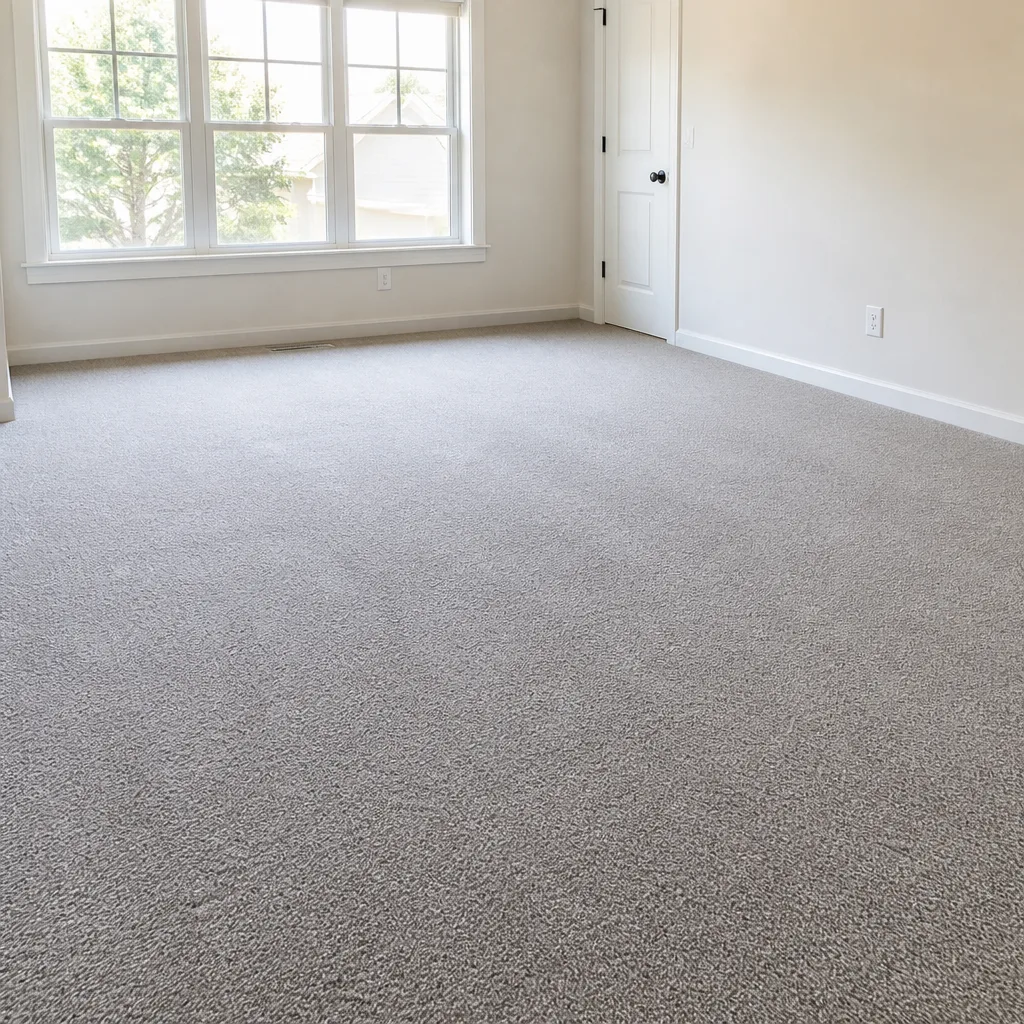 Carpet
 Shaw
 Mohawk
 COREtec
 Pergo
Free in-home measure and written estimate: Shaw, Mohawk, COREtec and Pergo lines compared on your own rooms, with carpet, tile, vinyl plank, laminate and hardwood laid out side by side
Get your free estimateHow to Hire a Flooring Contractor in Boulder City: A Step-by-Step Guide
Most homeowners in Boulder City shop for a flooring contractor backwards. They collect three bids, compare the totals, and pick the middle one. The license check, the slab conversation, and the acclimation plan come later, if they come at all. That order causes more failures than any product choice ever will. A cheap install over an unprepared slab will cup, pop, or telegraph within a season. And a contractor who can’t explain desert installation practice in a Southern Nevada home usually can’t fix what goes wrong either. This guide gives you a repeatable vetting process: license verification first, technical questions second, written scope third, and price last. By the end you’ll know how to hire a flooring contractor in Boulder City without guessing.
Quick Answer
Hire a flooring contractor in Boulder City by verifying a Nevada C-16 license through the Nevada State Contractors Board before you discuss price, then asking specifically about desert-climate practice: slab testing, expansion gaps, adhesive selection for high slab temperatures, and acclimation. Get the full scope, product, and warranty in a written contract. Only then compare bids. Any contractor who resists license verification or won’t put technical commitments in writing is not a contractor you want holding your deposit.
Styles & brands we work with
- Hardwood
- Engineered hardwood
- Luxury vinyl plank
- Laminate
- Porcelain tile
- Carpet
- Shaw
- Mohawk
- COREtec
- Pergo
Table of Contents
- Why Vetting Matters More Than the Bid in Boulder City
- Step 1: Verify the Nevada C-16 License
- Step 2: Ask the Desert-Climate Questions
- Step 3: What a Real Estimate Visit Looks Like
- Step 4: What a Legitimate Written Contract Must Include
- Step 5: Southern Nevada Red Flags to Watch For
- Step 6: Why One Contractor for Multi-Surface Projects Matters
- Step 7: How to Compare Bids Without Comparing Apples to Oranges
Why Vetting Matters More Than the Bid in Boulder City
The hardest part of a flooring project isn’t picking a color. It’s trusting the person who installs it. In Boulder City, that trust is heavily testable – and a lot of homeowners skip the test.
Flooring contractors in Nevada are required to hold a C-16 license. That’s a specific classification for floor covering work, and it exists for good reasons. It’s a regulated trade, not a handyman grab-bag. A surprising share of local flooring jobs get handed to someone operating under a general handyman exemption, which covers small repair-level work but doesn’t cover a full install. When that goes wrong, the homeowner typically has no board complaint path, no bond, and no recourse beyond civil court.
The bifold door is the price comparison itself. When three bids land on your table, the cheapest one is often cheap because it’s unlicensed, uninsured, or using thinner underlayment and lower-grade adhesive. That’s not a discount – it’s a different job wearing the same description. So the real evaluation isn’t “which number is lowest.” It’s “which contractor has actually done this work, on this kind of slab, in this climate, for people who can call them back if it fails.”
The Boulder City-specific wrinkle is the climate. This is desert country, where the slab under a first-floor room stays warm most of the year and swings hard in summer. Different surfaces respond differently to that. Wood expands. Vinyl contracts. Adhesive behaves differently at different slab temperatures. The installation details that matter in a desert home are not the same ones that matter in a more temperate market, and a contractor whose only reference is generic national training won’t know where those differences bite.
So the vetting process below is about guarding the deposit and guarding the outcome. Both come down to the same question: does this contractor know what they’re doing with this house?
Step 1: Verify the Nevada C-16 License
This step happens before the first pricing conversation. Not after, not at the end. Before. If a contractor is licensed, they’ll be comfortable with a license check: it takes a few minutes and works in your favor.
Here’s how to run the check.
- Ask for the license number in writing. “Can you text or email that to me?” If they can’t produce a number, that’s the whole conversation. A licensed contractor knows their number.
- Look it up on the Nevada State Contractors Board website. The Board maintains a public license lookup. You can search by license number or by business name. Confirm the license is active, not suspended or expired.
- Check the classification. The classification should be C-16, the floor covering classification, for a full flooring install. If a contractor holds a different classification, ask specifically how their license covers the work you’re hiring for.
- Confirm the business name matches the bid. If the license is issued to “ABC Flooring LLC” but the written bid is from “ABC Home Services” or an individual’s name with no DBA, pause. That mismatch is a known paper trail gap.
- Ask for the Certificate of Insurance. General liability and workers’ compensation should both be current. If a worker is injured on your property and there’s no comp coverage, that becomes your problem.
The Board also exists as a complaint channel. That’s arguably the most valuable thing a license buys you. If a licensed contractor walks off the job or installs something that fails, you have a formal avenue to raise it. With an unlicensed installer, you have none.
One honest ask on this: a legitimately busy contractor won’t be annoyed by this step. They’ll send you the number. A contractor who gets irritated, evasive, or starts explaining why the license “isn’t really necessary for residential work” has told you everything you need to know. Put the phone down.
Step 2: Ask the Desert-Climate Questions
This is where the conversation gets real. Anyone can say “we’ve done lots of flooring here.” The specific questions below will sort a genuine local pro from someone repeating brochures.
Question 1: How do you test the slab before installing?
A concrete slab in a desert home carries moisture even when it’s not visible on the surface. A strong contractor will test before installing anything non-permeable – luxury vinyl, tile, laminate – because trapped moisture causes failures that show up months later. Expect a moisture test method named. If the answer is “we just glue it down,” move on.
Question 2: How do you handle expansion gaps with this climate?
Wood and laminate both move with seasonal humidity changes. A desert home sees meaningful expansion in the wetter winter and meaningful contraction in the dry summer. Proper installation leaves an expansion gap at the perimeter, hidden under trim. Too tight, and boards buckle. A contractor who waves this off hasn’t installed much wood in this climate.
Question 3: What adhesive do you use in Arizona and Southern Nevada slab conditions?
Adhesive selection matters more here than most homeowners realize. In Southern Nevada, a slab exposed to the afternoon sun can get hot – hot enough that a standard adhesive cures too fast, or softens on a hot day, causing tile to go hollow. A contractor with desert practice will name a specific adhesive category for high-temperature concrete, or explain how they control slab temperature before and during install.
If they answer, “we use the same adhesive everywhere,” that’s a tell.
Question 4: How long do you acclimate the material before installing?
Acclimation means letting the flooring sit in the home to settle to indoor temperature and moisture conditions before installation. Standard practice exists, but the exact time depends on the product and the home. The point of the question isn’t the number – it’s whether the answer is “it depends on the product’s instructions” or “we install the same day it arrives on the truck.”
Question 5: How do you stop installers from walking on unfinished adhesive areas?
This is about process discipline. Slab-temperature prep, adhesive control, foot traffic – all of it drives whether the floor fails. Ask how they run a job site from start to finish. The vaguer the answer, the more likely you’re dealing with a crew who learned the work by watching YouTube.
For more on how specific surfaces behave in this climate, see our full guide to Boulder City flooring conditions.
Once these questions are answered to your satisfaction, you’re ready for the estimate visit itself. That’s covered next.
Step 3: What a Real Estimate Visit Looks Like
The best single test of a flooring contractor is the estimate visit itself. If they’ll show up, measure carefully, and ask the right questions, you’ve learned a lot about the install. If they’ll quote you over the phone without looking at the room, you’ve learned something else.
A solid estimate visit should include:
- Room-by-room measurement. Not a rough square footage guesstimate. Actual dimensions, including closets, doorways, and irregular shapes.
- Slab or subfloor inspection. Checking for cracks, unevenness, and moisture. On wood subfloors, they should be looking for squeaks, loose boards, and any soft spots.
- Threshold and transition discussion. How does the new floor meet the adjacent flooring? Different heights, trim profiles, transition strips – these matter and too many installers skip them.
- Room usage questions. Which rooms are these? Is this a bedroom, a bathroom, a kitchen? The correct product choice depends heavily on how the room actually lives. A bedroom carpet is a different decision from a bathroom floor.
- Product samples in hand. They should bring physical material so you can see it in your light, not just a photo on a screen.
- Written quote, not verbal. The price you agree to should arrive by email or printout with the scope and product named. A handshake quote and a phone number is not a quote.
While they’re in your home, watch how they handle the estimates. Do they look at the slab? Do they check the door clearances? A professional estimator is scanning the job. If they walk through in two minutes and write a number on a card, the installation will probably match the estimate process: too quick, missing details.
For example, when you’re deciding between surfaces, this is the moment to see and feel the material in your actual light. If you’re considering luxury vinyl, ask about the specific products. COREtec and LifeProof both come in planks that fit most Boulder City living spaces, and seeing them under your light versus the showroom light will change your mind about the color. Same with carpet: a bedroom sample at home reads very differently than a swatch under showroom lights.
This visit is also where you should ask about start dates and whether the schedule is defined. Any “we’ll fit you in” language on a job this size is a problem. Your floor needs a booked install day, and the estimate visit is where that scheduling conversation should be pinned down in writing.
Step 4: What a Legitimate Written Contract Must Include
The written contract is the document that holds when the install is over and the invoice is due. Everything you agreed to verbally should live there. Fill in the blanks on the template below, or check the contractor’s contract against it.
A legitimate written flooring contract should include all of the following:
- Product specification. Brand name, product name, color, and quantity for each room. If the contractor has proposed a specific material line, the contract should name it. This is the single most common place where bait-and-switch happens: “we’ll use the brand we carry” isn’t the same as a named product.
- Full scope of work. What’s being removed? Is there demo included? What about disposal of old flooring? Underlay or adhesive included? Trim and baseboards – removed and reinstalled, replaced, or excluded? What about transitions and thresholds?
- Subfloor prep in explicit terms. Any grinding, leveling, or patching the job requires should be named. “Subfloor prepped as needed” is vague and invites a change order.
- Payment schedule. Deposit amount, progress payments, and final payment tied to your inspection – not before. A contractor who wants 90% upfront is a red flag regardless of what the license says.
- Warranty terms in writing. Product warranty and workmanship warranty should be separated. “We stand behind our work” is not a warranty. The warranty should name what’s covered, for how long, and who honors it.
- Timeline and sequencing. What’s the install window? If the contractor hasn’t committed to a duration in writing, you have no way to raise a red flag if the job stalls.
- Change order process. How does the contractor handle a mid-job surprise (rotten subfloor, unexpected moisture)? The contract should say how changes get approved and priced.
Two specific verbal promises to force into writing:
- Specific product name. If they said “we’ll use Mohawk carpet,” write the exact Mohawk line and color on the contract.
- Warranty length and coverage. If they said “our work is warranted for X years,” that exact phrase should appear in the signed contract.
Anything a contractor won’t put in writing isn’t a commitment. It’s a conversation you may need to have again later with no contract in hand.
Step 5: Southern Nevada Red Flags to Watch For
The Southern Nevada flooring market has its own flavor of bad-actor behavior. Some red flags are general, others are particular to this region. Here are the ones worth knowing before you sign a contract in Boulder City.
- Out-of-state crews brought in for subdivisions. Large residential developments sometimes bring in quickly assembled install crews from out of state. These crews don’t stick around. If a floor fails six months later, you have no one to call locally, and the installing company’s owner is often just as gone. Ask any contractor you hire whether the installers who’ll be in your home are local to the area and directly accountable to the company you contracted with.
- Bait-and-switch material substitutions. This is the classic. You agree on COREtec or a specific Pergo color, then the day of install a “comparable” product shows up. Rarely as good. Often visually different. The red flag: the contract named no specific product. Fix: name it in writing before signing.
- Vague warranty language. “Lifetime warranty” sounds great. It’s meaningless unless you know who honors it and what’s covered. Ask how a claim is filed, who pays for the subfloor repair, and whether the warranty transfers if you sell the house.
- Estimates that change after demolition. Demo reveals subfloor problems, which is a legitimate reason for a change order. The red flag is a contractor who promises the quote but uses “subfloor prep” as an open-ended, unbounded line item that inflates unpredictably.
- Pressure to cancel your deposit terms. “We don’t do refundable deposits.” A legitimate deposit is refundable within a specific window according to the contract.
- Contractors who won’t provide references. A seasoned contractor will have past customers they can point you to. If they can’t name one, that’s odd for anyone who claims to have installed a lot of floors.
- Sales tactics on a schedule. “Sign today and we’ll give you a discount.” Nobody who installs floors for a living needs a daily sales target. You should feel no pressure to choose a material on the first visit.
The Southern Nevada-specific issues are the ones most likely to hit a Boulder City project. Out-of-state crews might actually do fine work. But if the company is from out of state and every part of the process – estimate, install, and follow-up – runs through a crew that’s leaving town, you’re not getting a local warranty. You’re getting a mailing address.
Step 6: Why One Contractor for Multi-Surface Projects Matters
Most whole-home floors aren’t one product. They’re a stack: tile in the bathroom, luxury vinyl plank in the living and kitchen areas, carpet in the bedrooms. That’s a sensible design. The question is how many contractors it takes to install it.
When two or three contractors touch one project, you get a new risk: coordination failure. Tile goes down, then the vinyl installer needs the tile finished to set the transition strip. The carpet needs access to the hallway the vinyl crew is using as a staging area. A delay in one slows the others. And when something fails – a lifted tile edge, a gap between carpet and vinyl at a doorway – the finger-pointing begins. The tile guy blames the vinyl guy. The vinyl guy blames the tile guy. Neither fixes it.
A single contractor capable of all three surfaces solves that. One schedule, one point of contact, one person accountable for the transition at every room edge.
There’s a second reason: material matching. When one contractor supplies the tile, the vinyl, and the carpet, they can plan the color story and the transition details together. When three contractors each bring their own products, the base tones fight each other in adjacent rooms, and each installer blames the other guy’s product.
For a whole-home project in Boulder City, one contractor covering all three surfaces is usually worth more than a lower bid from three separate trades.
This is also where product knowledge at the source matters.
- Carpet in bedrooms reads warm and quiet; good in rooms where comfort matters more than moisture.
- Tile in bathrooms, entryway, and laundry handles water and traffic with minimal fuss.
- Luxury vinyl plank in living and kitchen areas gives you a hard surface that tolerates water and heavy foot traffic while looking like wood or stone.
If you need carpet in bedrooms and LVP in open areas, that’s a single scope under one roofer, not a coordination project between three companies. Our carpet installation and tile flooring installation pages outline what that single-contractor scope looks like in practice.
Step 7: How to Compare Bids Without Comparing Apples to Oranges
Three bids arrive. One is $4,000, one is $6,200, one is $8,900. What do you do?
Almost everyone looks at the middle number and picks either the cheapest or the middle. That’s understandable, and often wrong. Bids only compare when they describe the same job. Here’s how to flatten the comparison.
- Pull the scope from each bid into a side-by-side list. Is demo included in all three? Is disposal? Underlay? Trim reinstallation?
- Name the product on every bid. If a bid doesn’t name the exact product, call and ask for the spec sheet in writing before comparing prices.
- Separate the material cost from the labor cost. A bid that’s deliberately cheap on labor will show up here. A bid with a low material price and a high labor price could be hiding a highly-skilled installer or a costly change order later.
- Check the warranty separately. A lower bid with no written warranty is a higher risk than a slightly higher bid with a named, written warranty.
- Look at the subfloor prep line. If two bids assume “no prep needed” and one includes prep, the one with prep is probably more honest, not more expensive.
The move that follows: if a bid stands out, call and ask them to walk through their number line by line. A legitimate contractor will be happy to explain. One who can’t doesn’t need your business.
For surface-by-surface guidance on top products available through a single contractor, see our Flooring Boulder City overview.
Common Mistakes to Avoid
- Handing over a deposit before verifying the C-16 license. This is the single biggest mistake in the whole process. An unlicensed installer who takes a deposit and disappears leaves you with no remedy and a torn-up floor. Verify first, deposit second.
- Assuming a “handyman” can cover a full install. Nevada’s handyman exemption is not the same as a C-16 flooring license. A handyman may be able to do small repair-level work, but a full floor install is outside that boundary. Homeowners get burned here specifically because handyman rates are lower.
- Accepting a verbal quote without a written contract. The number on the phone is not a contract. A bid that doesn’t name product, scope, and warranty is a placeholder. Insist on the written version before any money changes hands.
- Skipping the slab moisture test because the floor “looked fine.” Slab moisture isn’t something you can see. Install a non-permeable floor over a wet slab and it will fail, sometimes within one season. The test is cheap; the reinstallation isn’t.
- Comparing bids that don’t describe the same job. Cheapest bid isn’t the cheapest job. It’s often the least complete bid. Pull every bid to the same scope before you compare numbers.
- Hiring three contractors for one whole-home project. Finger-pointing when something fails at a transition strip turns into an unproductive stalemate. One contractor for all three surfaces is the fix.
- Canceling room dimensions from memory. If the contractor didn’t actually measure the room, the bid is a guess. Measurements taken at the door with a laser are not the same as a room walk-through with trim and doorway assessment.
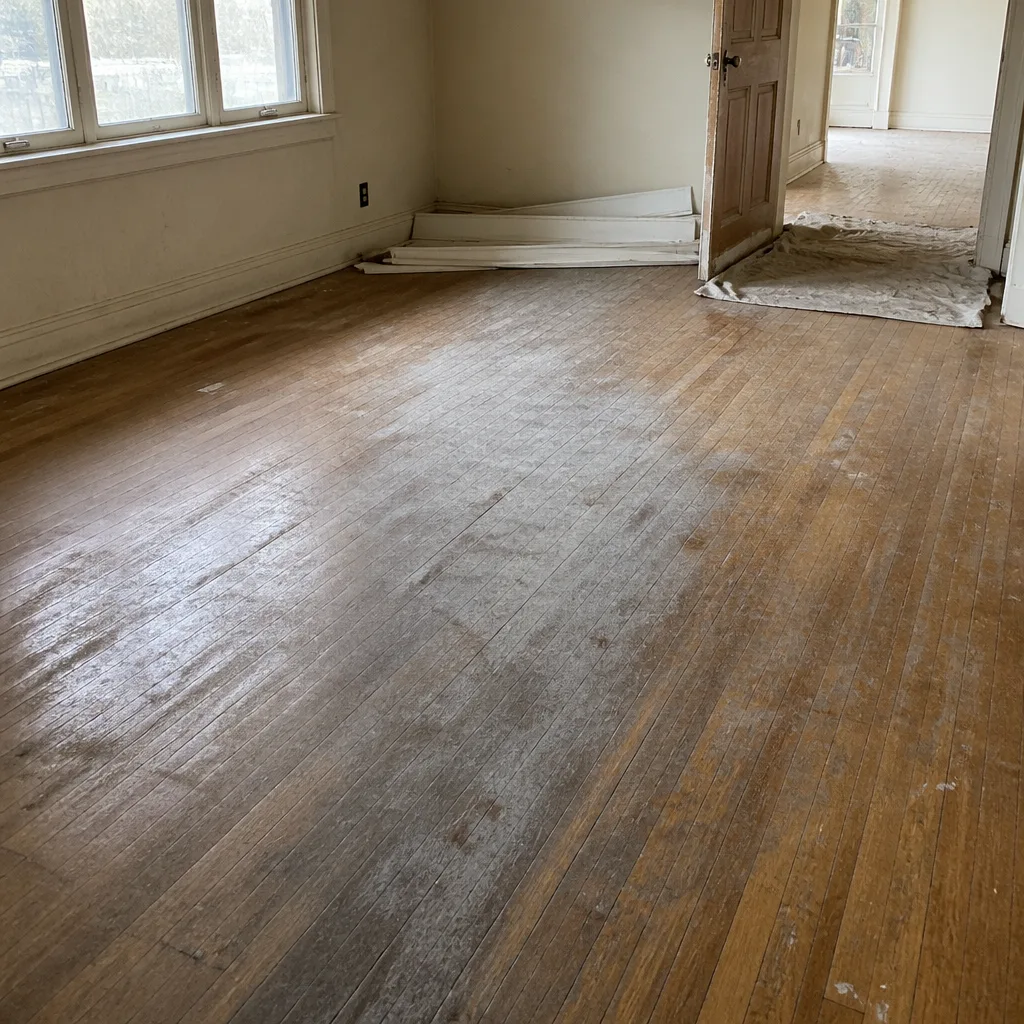
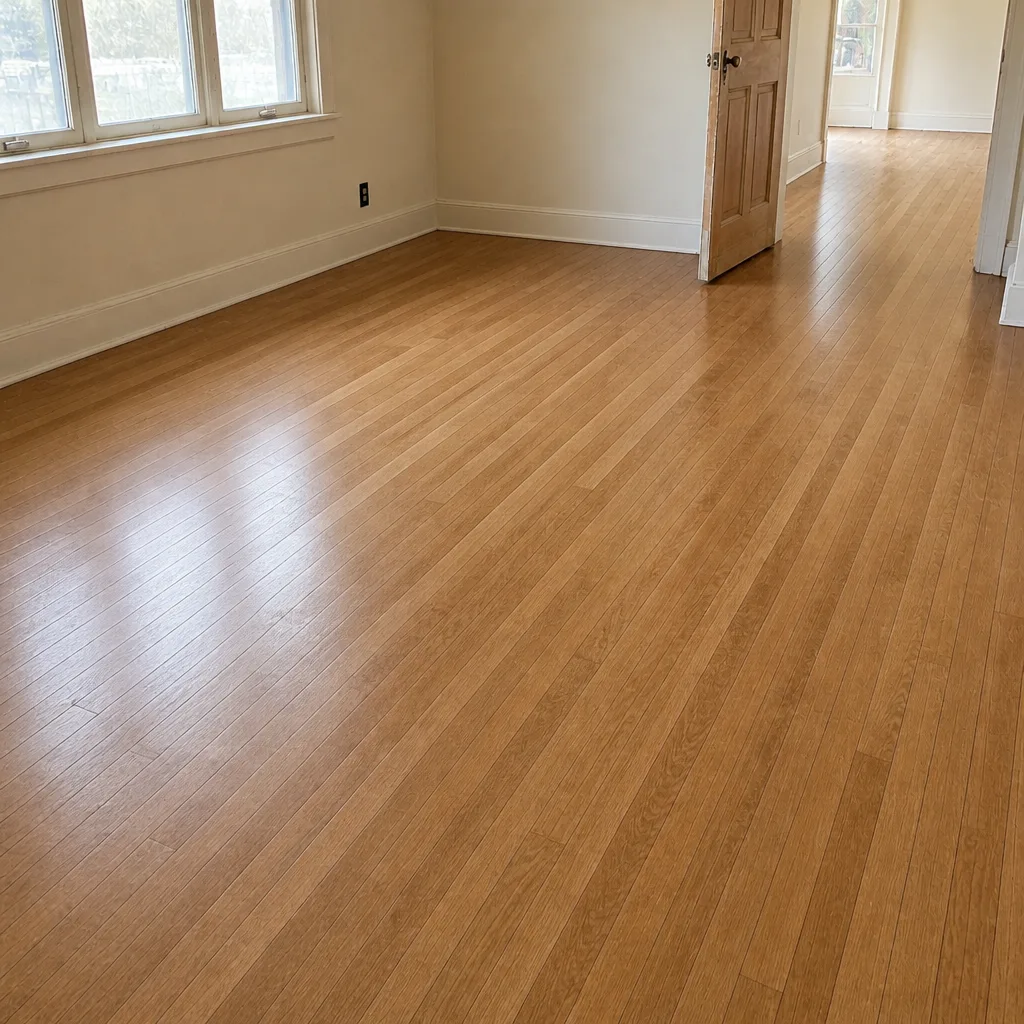
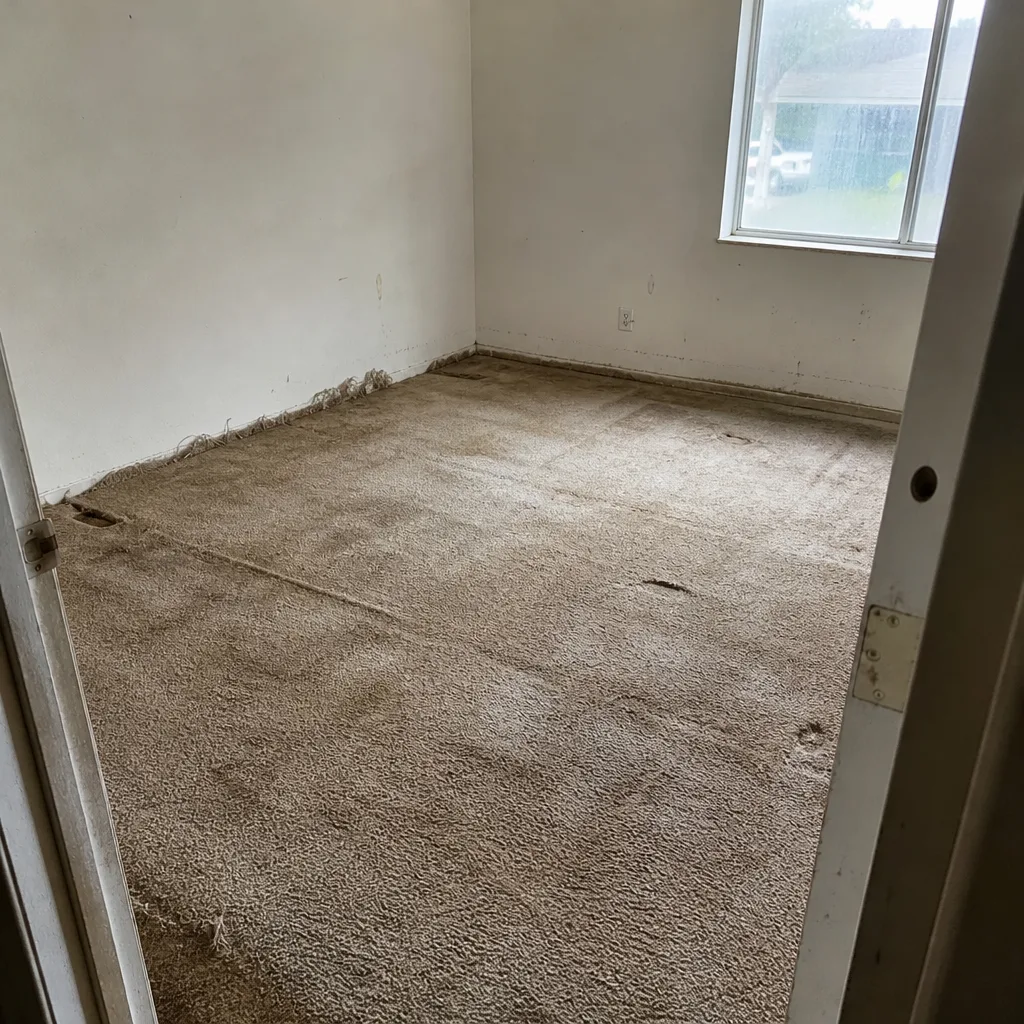
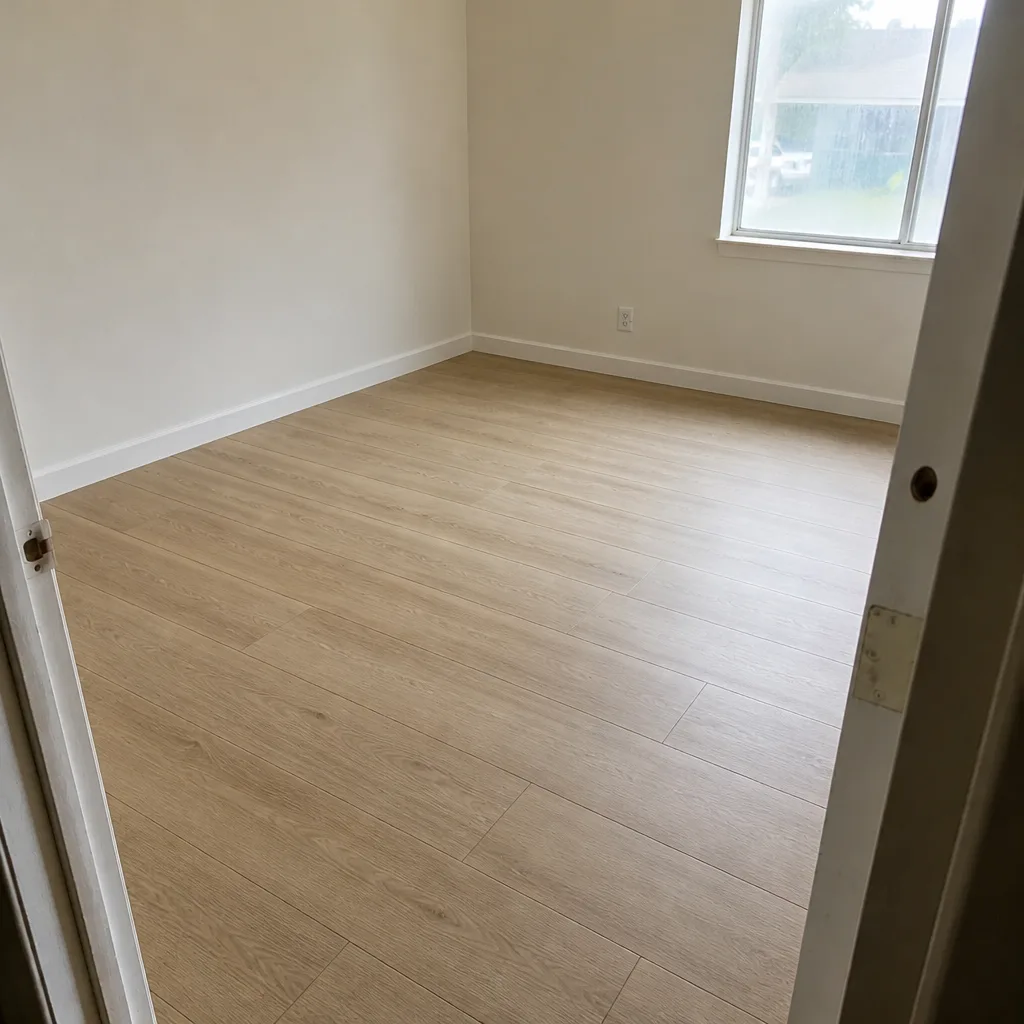
See the difference
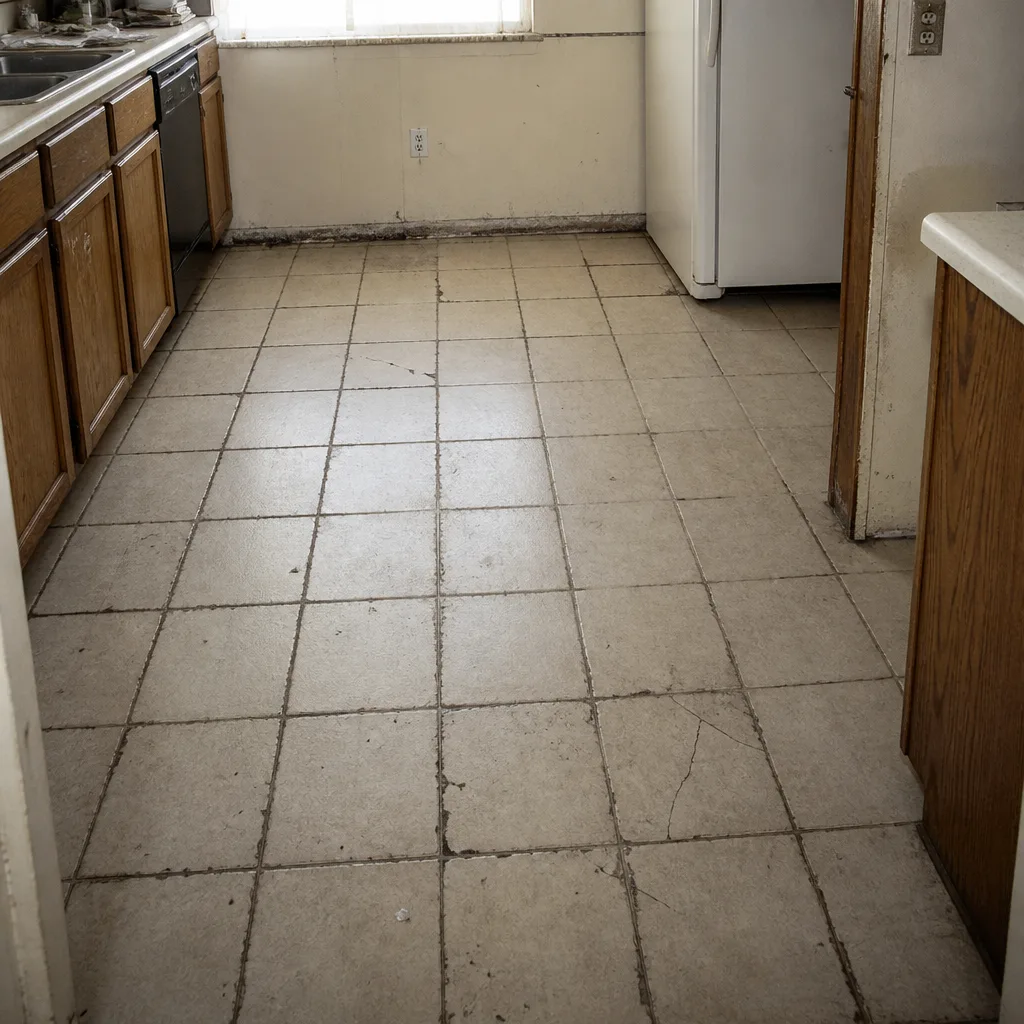 Before
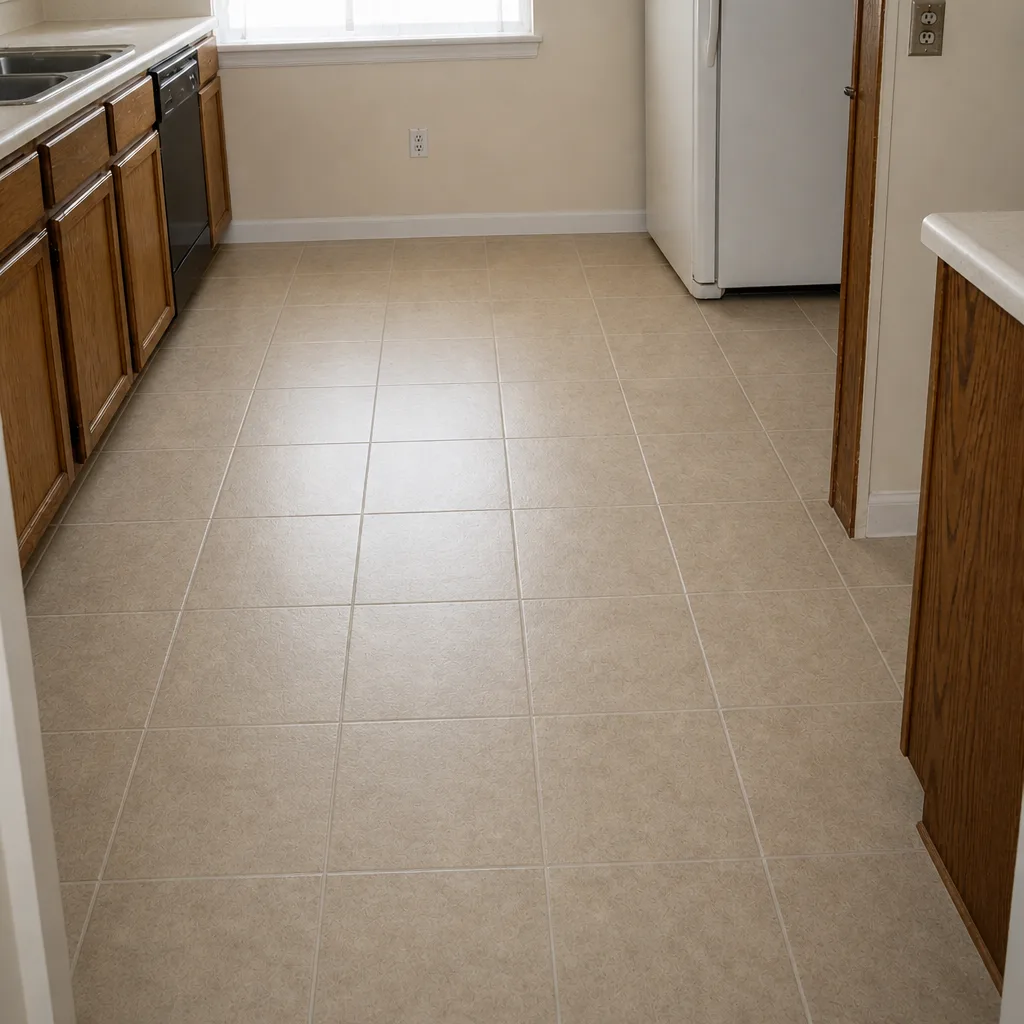 After
 Before
 After
 Before
 After
When to Call a Professional
Some jobs are worth a phone call, and some are worth a “not this personally” call. The clearest cases:
- You’re replacing more than one room’s floor at the same time. Multi-surface projects are where coordination failures hit hardest and where a single-contractor scope pays off most.
- You’re moving into a home where the floor is unknown. Any home where you don’t know what’s under the surface benefits from professional slab testing before installation.
- Your existing hardwood is worn but structurally intact. Hardwood refinishing restores the floor and is often a smarter choice than replacement – but it depends on the wood’s thickness and condition, which is checked at the estimate visit.
- You’ve been quoted a scope that doesn’t name a product. That’s a job waiting to get switched. Have it reviewed by a contractor who’ll put the product name in writing.
- Somebody has already gotten a deposit out of you and gone quiet. You’ve likely run into an unlicensed or under-licensed operator. Get a professional to look at what’s been left behind.
Flooring Boulder City offers free estimates in Boulder City. Call (833) 842-8455 to schedule yours. We answer 24/7. Fast dispatch from 7am to 7pm, Sunday through Friday.
Frequently Asked Questions
Yes. Nevada requires landscape, flooring, and similar trades to be licensed, and flooring contractors hold the C-16 classification through the Nevada State Contractors Board. Verify the license number and classification before discussing price. A contractor who can’t produce a license number isn’t covered for the work you’re hiring.
Use the Nevada State Contractors Board’s public license lookup online. Search by license number or business name, confirm the license is active and classified C-16, and confirm the business name on the bid matches the name on the license. Ask for the certificate of insurance at the same time. It takes a few minutes and should happen before any deposit conversation.
In a Boulder City home, the differences are slab moisture testing before non-permeable installs, extra attention to expansion gaps for wood and laminate, correct adhesive selection for high-temperature slab conditions, and proper acclimation time before installation. These details matter more here than in more temperate markets because slab temperatures and seasonal humidity swings run wider. A contractor who doesn’t test or can’t name the adhesive category hasn’t installed much in this climate. Call (833) 842-8455 for an exact quote on your project – estimates are free.
Usually yes. One contractor means one schedule, one point of contact, and one party accountable when a transition strip between surfaces fails. Multi-surface projects are also where material selection and color coordination benefit from a single source. We cover all three surfaces – carpet, tile, and hardwood – so a whole-home floor plan runs through one scope instead of three separate contractors. Call (833) 842-8455 to schedule your free estimate.
A legitimate contract names the exact product (brand, line, color), lists the full scope of work including demo and disposal, names subfloor prep in explicit terms, states the payment schedule and warranty terms, includes a timeline, and describes how change orders will be approved. Any verbal promise – a warranty length, a specific product – should appear in the signed contract. If a contractor won’t put it in writing, it isn’t a commitment.
The schedule depends on the job size, product type, and subfloor condition, and it’s set at the estimate visit. Product acclimation time, adhesive cure, and slab prep all factor in. The estimate visit is where the timeline and the booked install day are pinned down in writing. Call (833) 842-8455 for a free estimate and a timeline specific to your rooms.
For the combined scope, a typical split is luxury vinyl plank in shared and high-traffic areas and carpet in the bedrooms. COREtec and LifeProof are among the plank options that handle water and heavy traffic well in these spaces, and Mohawk or Shaw carpet covers the bedroom side. The right choice depends on how each room actually lives. Call (833) 842-8455 to walk through the options at a free estimate.
The Bottom Line
Hiring a flooring contractor in Boulder City comes down to five things: verify the C-16 license through the Nevada State Contractors Board, ask climate-specific installation questions, get a real estimate visit with room-by-room measurement, get the product and warranty in a signed contract, and don’t compare bids that describe different jobs. Use one contractor for multi-surface projects. None of this is complicated, but all of it is sequential – price comes last, not first. Get the vetting right and the floor has a chance to last the way it should. Call (833) 842-8455 to schedule a free estimate. We answer 24/7. Fast dispatch from 7am to 7pm, Sunday through Friday.
Written by the team at Flooring Boulder City.