
Last updated November 18, 2026
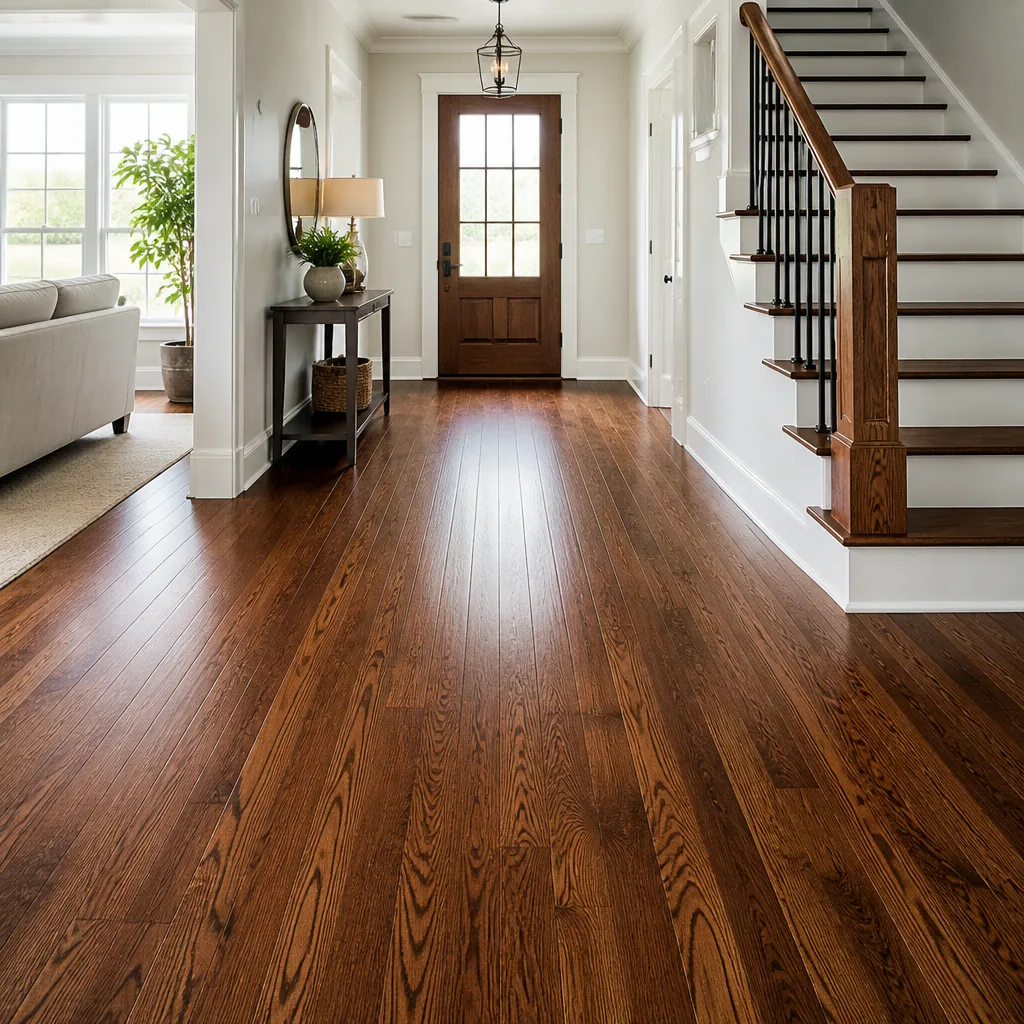 Hardwood
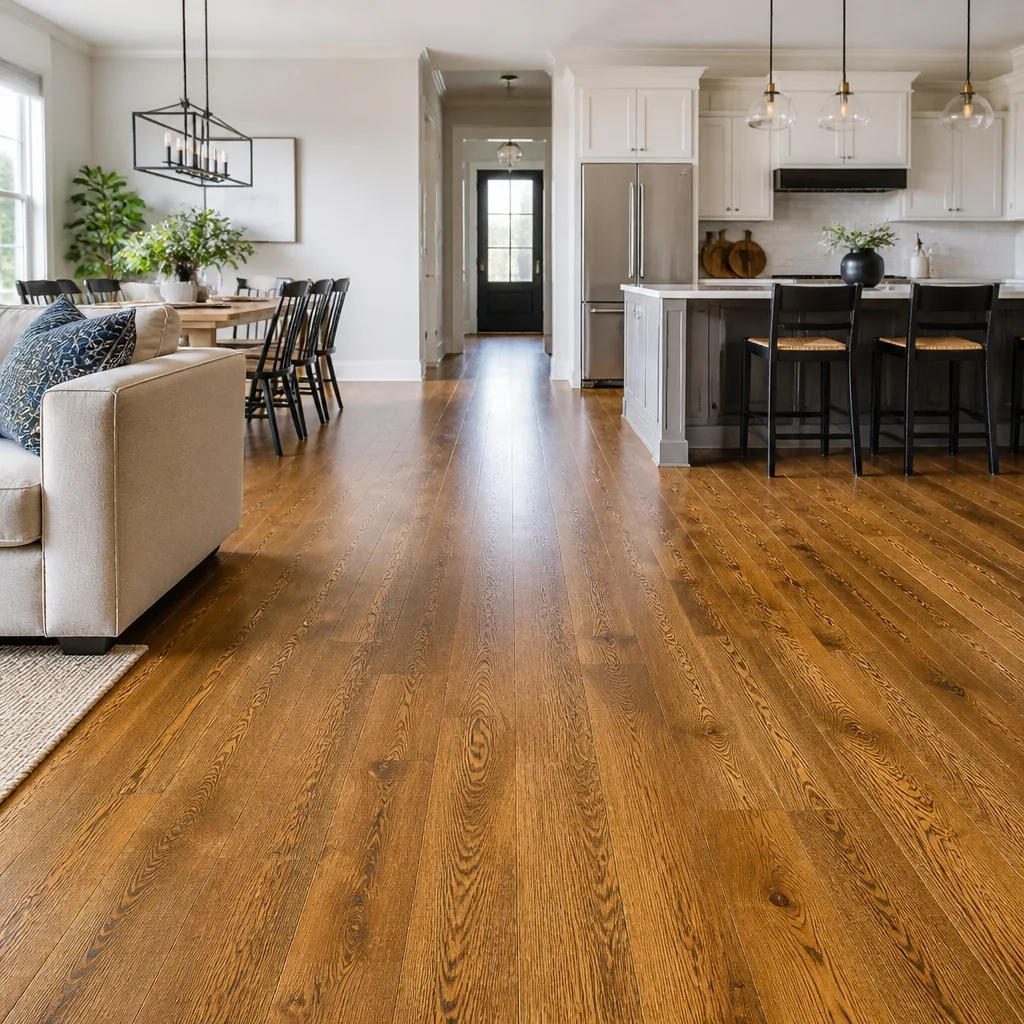 Engineered hardwood
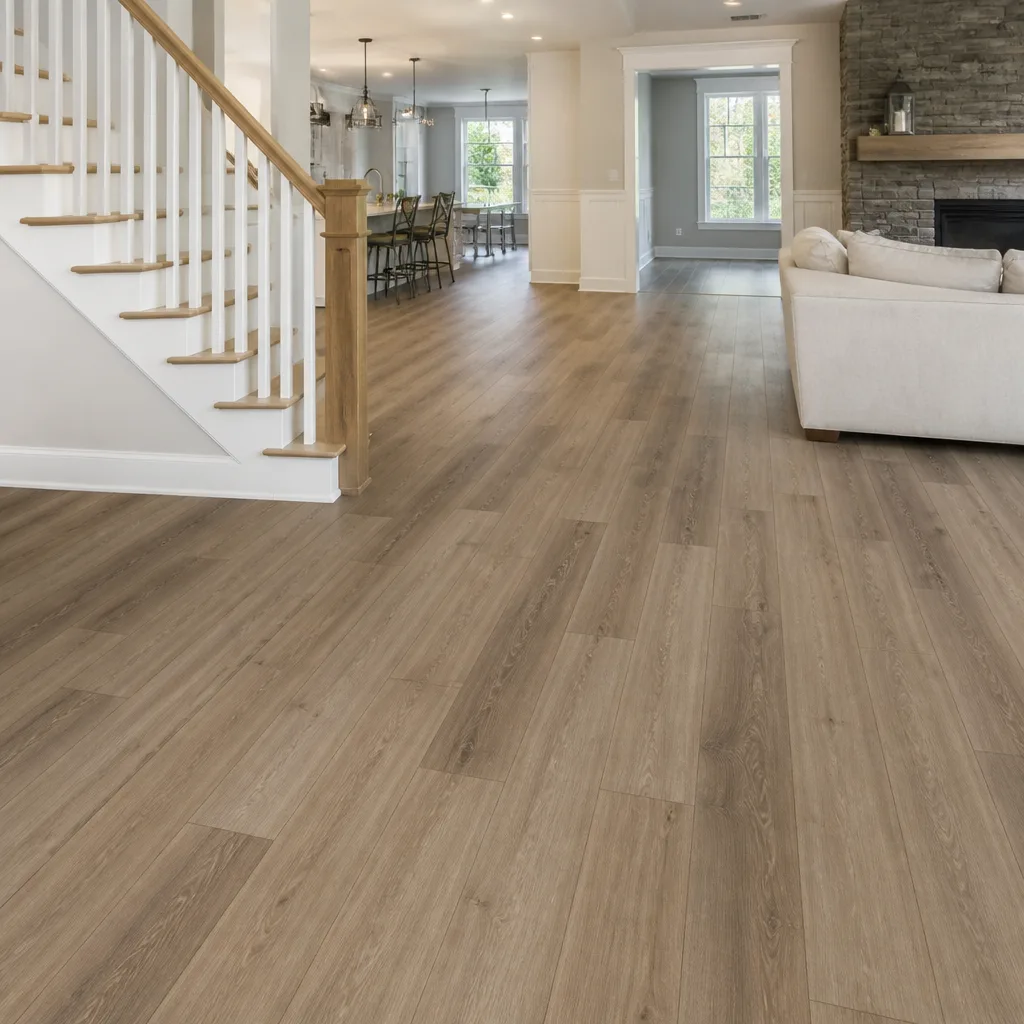 Luxury vinyl plank
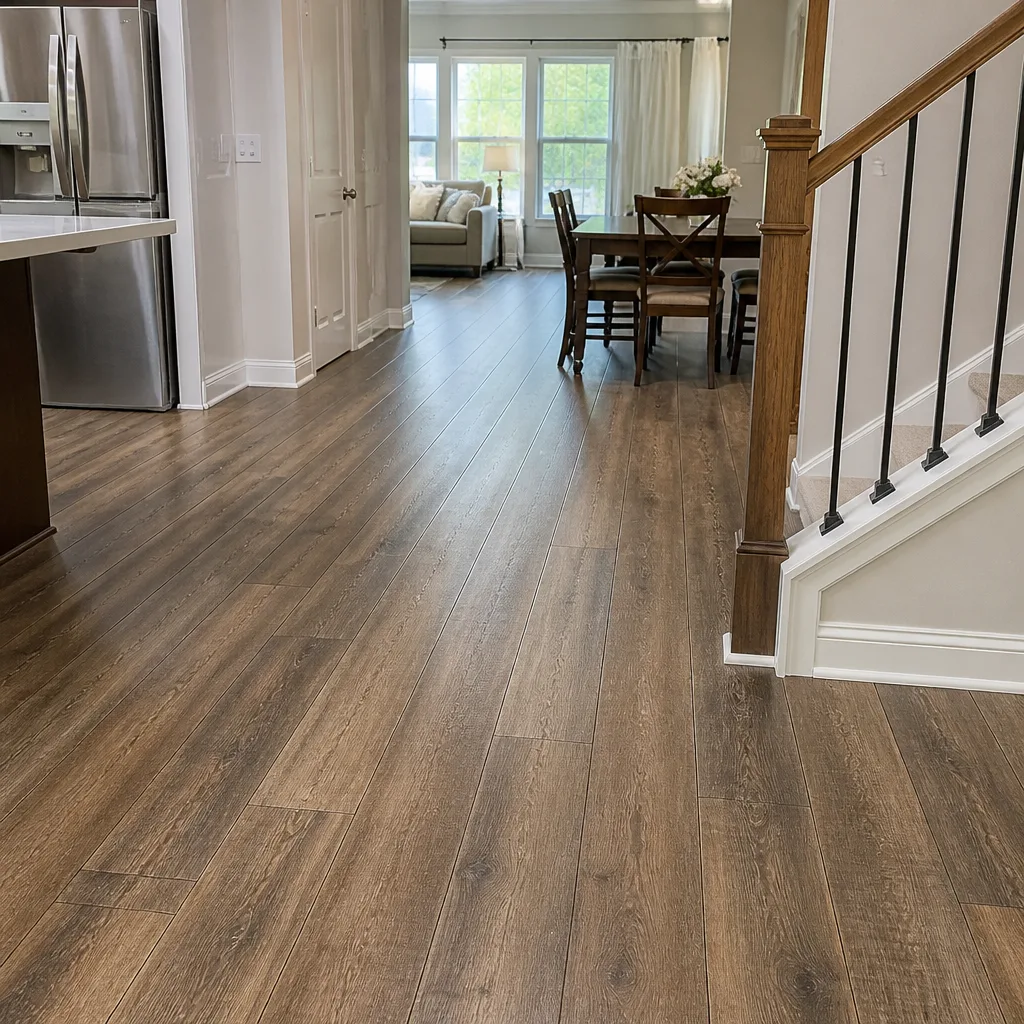 Laminate
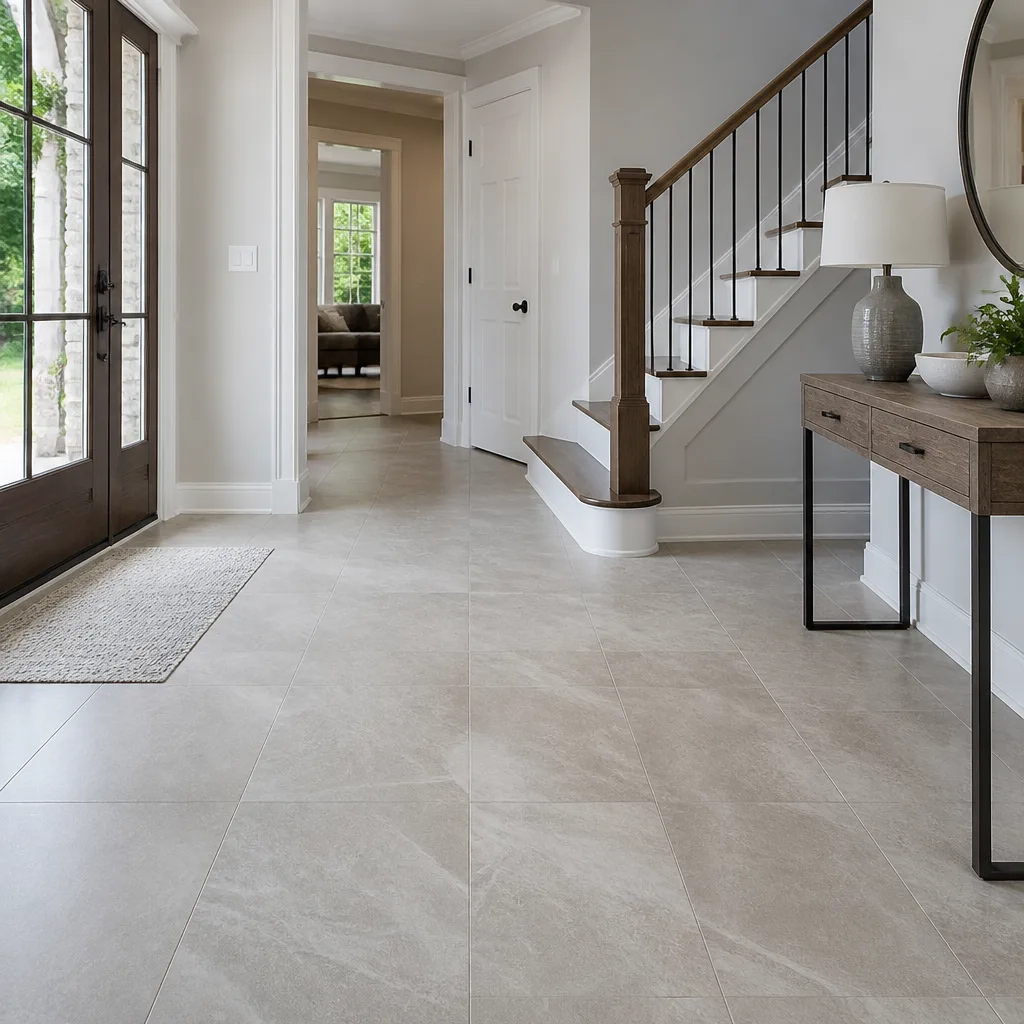 Porcelain tile
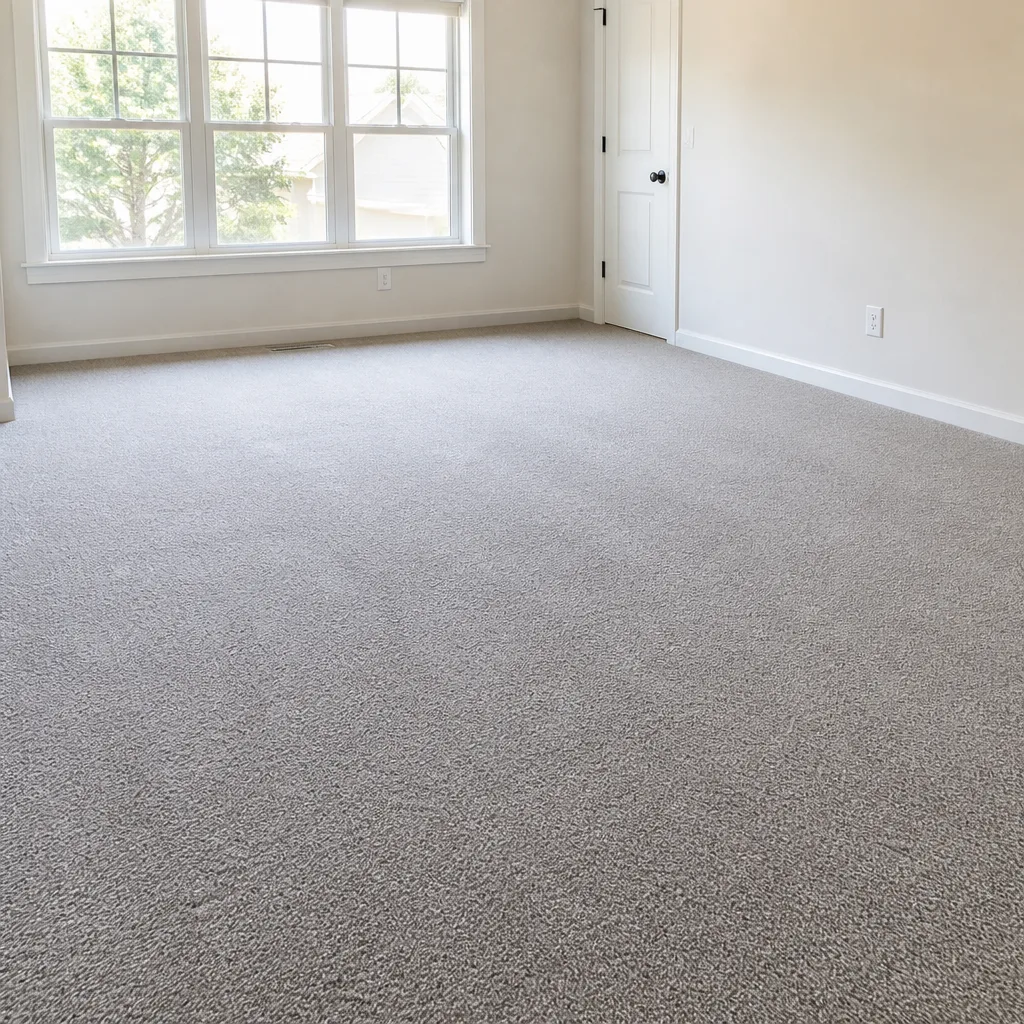 Carpet
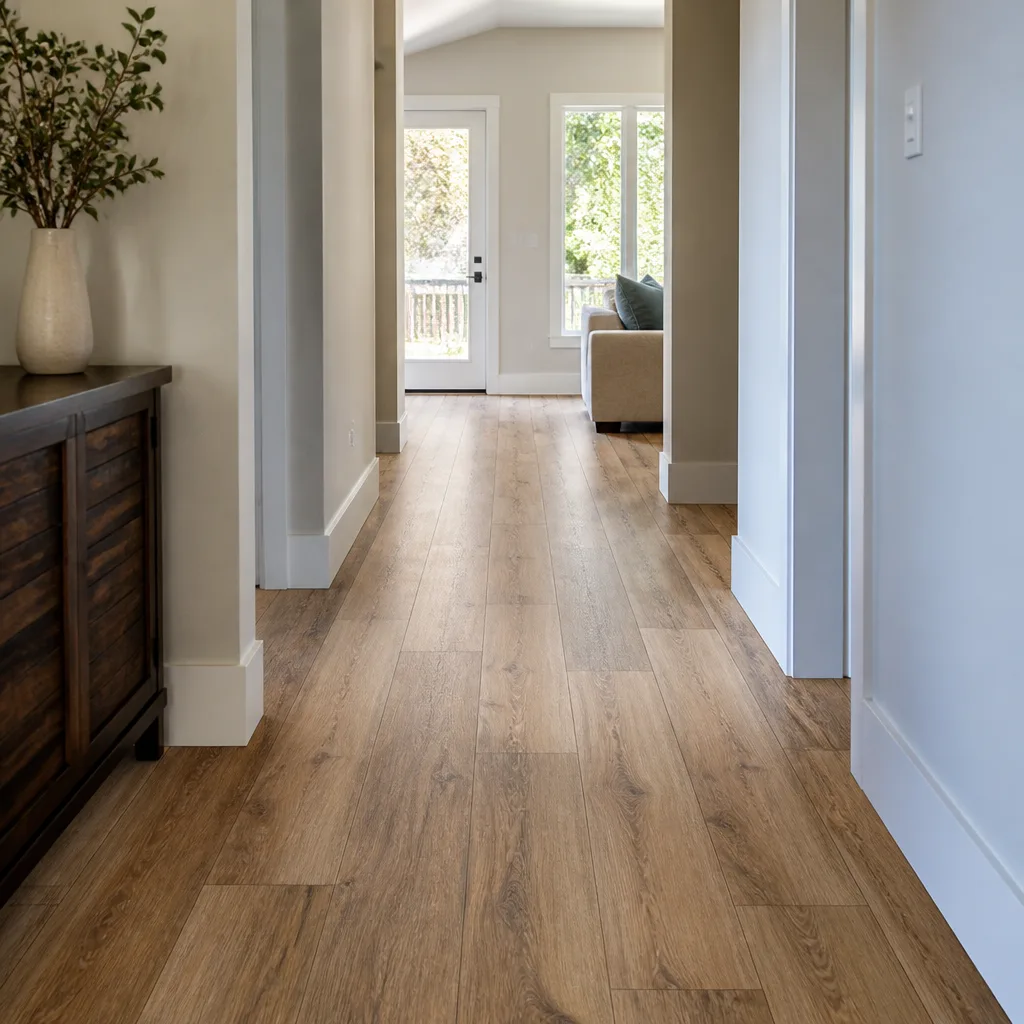 Shaw
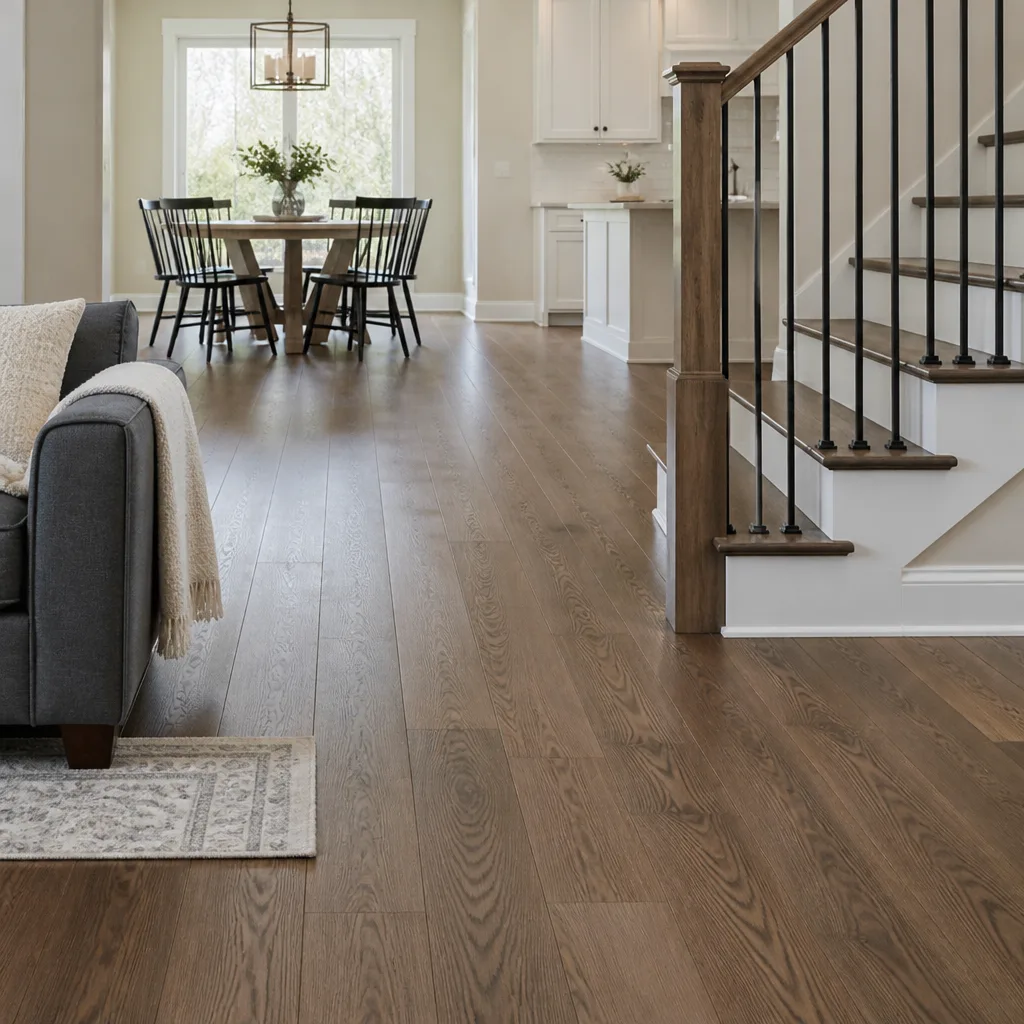 Mohawk
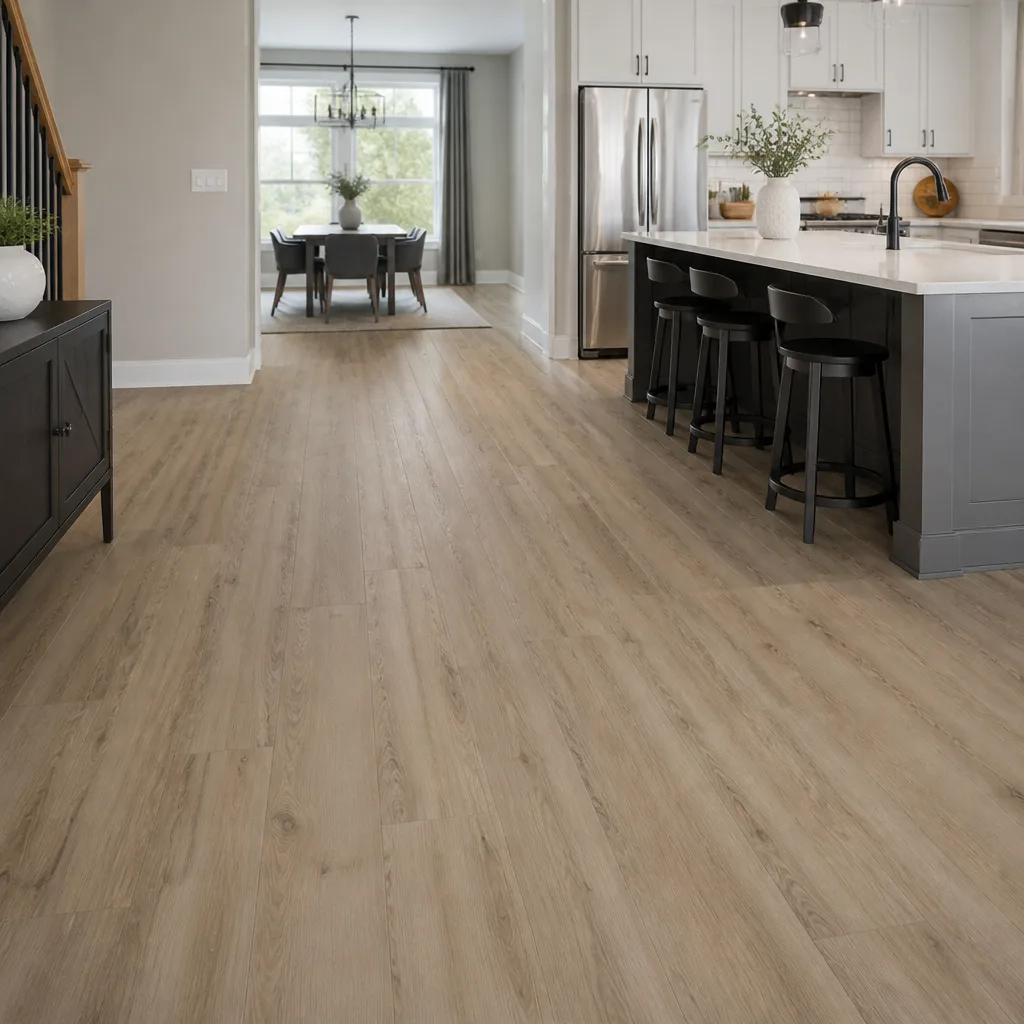 COREtec
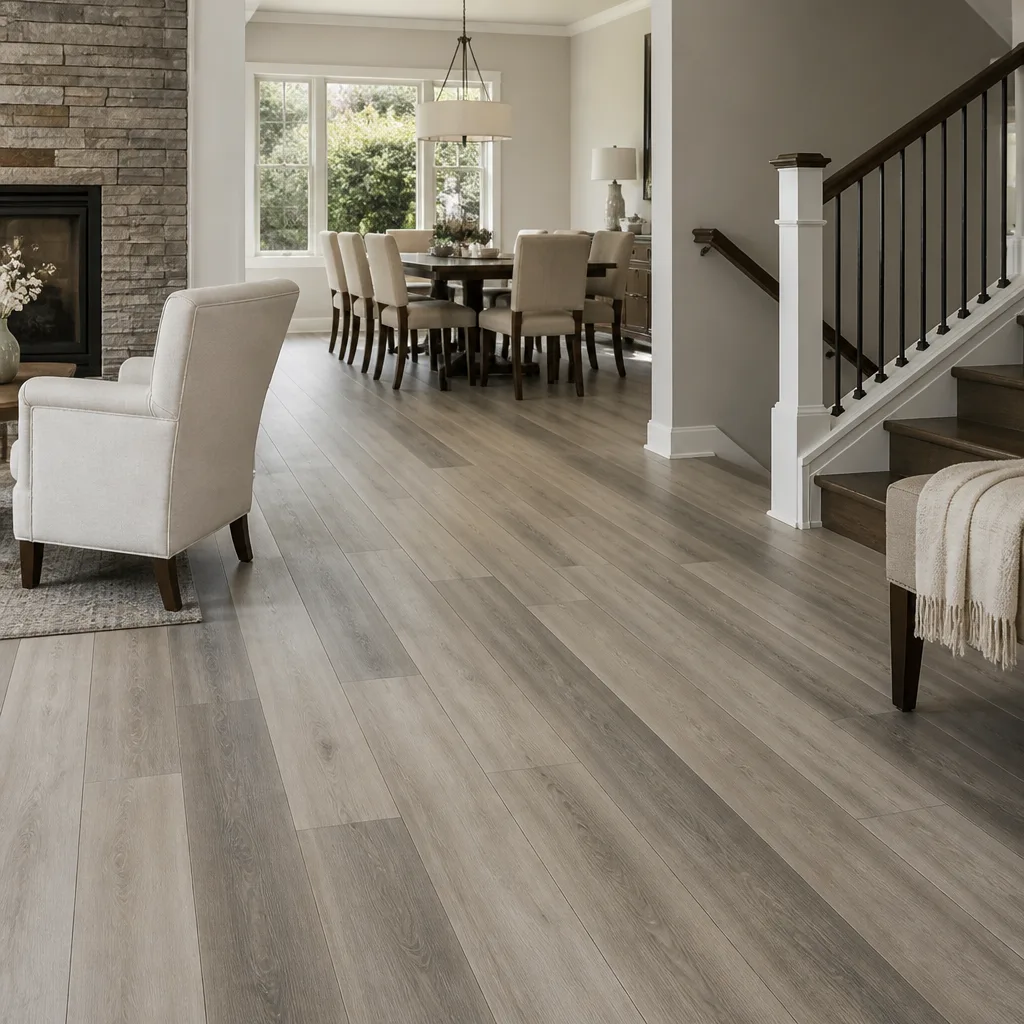 Pergo
Free in-home measure and written estimate: Shaw, Mohawk, COREtec and Pergo lines compared on your own rooms, with carpet, tile, vinyl plank, laminate and hardwood laid out side by side
Get your free estimateHow Boulder City’s Climate Can Affect Your Flooring Choice
Most flooring advice you’ll read online was written for a house somewhere with seasons, rain, and humid summers. Boulder City isn’t that house. The average yearly rainfall here is only about 4 inches, and summer highs regularly climb past 110°F. That combination does something specific to wood, vinyl, tile, and carpet that generic guides never mention, and it’s the reason a product that performs beautifully in a Midwest living room can gap, cup, or loosen in a Boulder City home within a single hot season. In this guide, we walk through how the Mojave Desert climate interacts with each major flooring type, why slab foundations change the rules, and how to pick a floor that actually holds up here.
Quick Answer
The best flooring for the Boulder City, NV climate is one that stays dimensionally stable through extreme heat, near-zero humidity, and wide daily temperature swings. In practice that means engineered hardwood, luxury vinyl plank, and porcelain tile generally outperform solid hardwood and natural fiber carpet. Solid wood can work, but only when installation accounts for our specific shrink-and-swell patterns, and a proper written estimate should address that before anyone orders material.
Styles & brands we work with
- Hardwood
- Engineered hardwood
- Luxury vinyl plank
- Laminate
- Porcelain tile
- Carpet
- Shaw
- Mohawk
- COREtec
- Pergo
Table of Contents
- Why Low Desert Humidity Makes Solid Hardwood Gap and Crack
- The Concrete Slab Reality in Boulder City Homes
- The Temperature Swing Between Desert Day and Night
- Which Floors Absorb and Radiate Heat
- Why Tile Is More Climate-Compatible Than You Think
- Material-by-Material Climate Scorecard
- How to Choose a Floor for Your Boulder City Home
- Common Mistakes to Avoid
Why Low Desert Humidity Makes Solid Hardwood Gap and Crack
Wood is hygroscopic, which means it takes on and releases moisture from the air around it. When humidity drops, the wood shrinks. When humidity rises, it swells. In most of the country that’s a gentle, seasonal back-and-forth. In Boulder City the air is bone dry most of the year, so the direction of that movement is overwhelmingly toward shrinking – and the wood never gets a chance to relax back into shape. Over months, planks pull apart at the seams, leaving the dark gap lines you’ve probably seen in older wood floors around town.
Where solid hardwood really struggles is at the edges of the board. As wood dries, the grain near the surface can check – tiny cracks that run along the plank. Deep checking isn’t reversible, and in severe cases a floor can buckle at a doorway or against a wall because the wood had nowhere to expand. It’s not that solid wood can’t work in Boulder City. It’s that solid wood demands installation that specifically accounts for a low-humidity environment, and it needs the homeowner to keep an eye on indoor humidity during the dry months.
Engineered hardwood handles this differently. Each plank is built from layers of wood with the grain running in alternating directions, bonded into a cross-ply core. That construction resists dimensional movement far better than a single piece of solid wood. A quality engineered product from a brand like Mannington or Armstrong can look identical to solid wood on the surface while behaving much more predictably here. Luxury vinyl plank goes further still – the core is a composite that barely reacts to humidity at all, which is why COREtec and LifeProof options have become so common in desert homes.
What to keep in mind if you’re considering wood:
- Solid hardwood: Beautiful, refinishable, but requires careful humidity management and generous acclimation before install.
- Engineered hardwood: A real wood surface on a stable cross-ply core. Better dimensional behavior in dry air.
- Luxury vinyl plank: The most humidity-tolerant of the three. Water-resistant and stable, though standing water and moisture from below still have to be dealt with.
If you already have solid wood floors that are gapping, refinishing can sometimes close small gaps and restore the surface – but whether it does depends on the thickness of the wood and its condition, which we check at the estimate visit. We offer Flooring Boulder City services across all three categories, so the recommendation is based on the floor, not on what we have the most of.
The Concrete Slab Reality in Boulder City Homes
Most Boulder City homes sit on concrete slab foundations. There’s no basement beneath them, which is one reason garages here hold so much of what a Midwest homeowner would store downstairs. But slab construction brings a flooring issue that surprises a lot of people: moisture vapor transmission. Even in a desert, concrete pulls moisture up from the soil below through capillary action. That moisture moves as vapor, not as a puddle, and it rises straight into whatever flooring sits on top of the slab.
Here’s the misconception. Homeowners hear “dry climate” and assume slab moisture isn’t a concern. In reality, desert slabs can still release vapor at a rate that affects adhesives, wood cores, and carpet backing. The absence of rain doesn’t stop the soil beneath the slab from holding moisture. And because Boulder City does get occasional monsoonal rain in late summer, the soil can go from dry to saturated and back again over the course of a season, which is exactly the pattern that pushes vapor upward.
This is why installation matters as much as product. Before any floor goes down on a slab, the moisture situation has to be assessed. Depending on the reading:
- A vapor barrier or underlayment may be specified to slow vapor migration. LVP systems like COREtec and LifeProof are typically installed over a vapor-rated underlayment for exactly this reason.
- An adhesive appropriate to the slab condition is chosen for glue-down installations. The wrong adhesive over a slab with active vapor will fail no matter how good the plank is.
- A floating system with a moisture-rated pad may be the right answer for carpet, tile, or certain rigid-core planks.
What we don’t recommend is skipping the slab check because it’s “just a dry climate.” In our experience, the installs that fail in Boulder City are usually the ones where slab moisture was never considered. The written estimate should tell you how the floor will be prepped and what’s going under it. That’s also why we do a free in-home measure and estimate before anyone books an install day – the slab is part of the calculation, and it can’t be assessed over the phone.
The Temperature Swing Between Desert Day and Night
Boulder City has one of the widest daily temperature swings in the country. Summer afternoons can sit above 110°F, and summer nights routinely drop into the 60s. That’s a swing of more than 50°F every single day, and that swing works on your floor continuously. Solid wood expands a bit in the warmth of the day and contracts again at night. Floating floor systems – planks that aren’t glued to the subfloor – are designed to move as a unit, which is why they need room at the edges to expand.
That room is the expansion gap. Most installation guidelines call for a gap at the perimeter, hidden under the baseboard, so the floor can shift without pushing into the wall. In a climate with a 50°F daily swing, the gap matters more than it would in a mild coastal climate. When the gap is too small – or when a floor is installed tight to a door frame or a cabinet toe-kick – the planks have nowhere to go and can buckle upward in the middle of the room or at a transition strip.
A few things this means for a Boulder City install:
- Respect the gap at every edge. Baseboards and trim are removable precisely so the floor has an expansion zone beneath them.
- Leave room at doorways. A transition strip doesn’t excuse a floor butted tight to the frame; the gap extends around every perimeter.
- Don’t store boxes or furniture tight against walls for weeks after install. The floor needs to find its resting position first.
- Check it seasonally. A small gap that looks fine in winter may close up in July. A quick look after a hot stretch tells you whether the floor is still behaving.
The good news is that engineered and rigid-core products are less sensitive to this swing than solid wood. A high-quality engineered hardwood or a composite-core plank handles temperature movement with more margin. Floating LVP from a brand like LifeProof is built around exactly this kind of movement. Still, no floating floor is immune to a too-tight install, and that’s a workmanship issue, not a product one.
Which Floors Absorb and Radiate Heat
Barefoot comfort is a real usability issue in a desert home. There’s a difference between a house that’s cooled to a comfortable temperature and a house that’s still radiating retained heat from the day – and in Boulder City, a home without AC running can easily hit 85°F inside. When that happens, the floor is either your friend or your enemy.
Dense materials like tile and stone absorb heat slowly and release it slowly. A tile floor that’s been cool all night will stay cool well into the morning, but a tile floor that’s soaked up a day of sun will hold that warmth for a while after the sun goes down. That’s not necessarily bad – it’s just something to plan around. Carpet is the opposite. It traps air in its fibers, which makes it feel warmer underfoot and quieter in the room, but a carpet that sits in a sunbaked room can feel stuffy if there’s no airflow.
- Tile: High thermal mass. Stays cool in shaded rooms, holds warmth in sunny ones. Best in bathrooms, entries, and kitchens where a tile floor reads as comfortable.
- Luxury vinyl plank: Low thermal mass, but a thin profile that warms to room temperature quickly. Comfortable underfoot and doesn’t feel cold in the morning the way tile can.
- Engineered hardwood: Warmer feel than tile, with more dimensional stability than solid wood. A good middle ground for living rooms and bedrooms.
- Carpet: Warmest underfoot, softest feel. The tradeoff is that carpet traps both heat and dust in a dry, dusty climate, so it needs regular vacuuming to stay comfortable.
- Solid hardwood: Warm underfoot, but the expansion and shrinking concerns covered earlier make it a bigger commitment in this climate.
In a Boulder City home that bakes in the summer, we usually steer living areas toward a mix: tile or LVP in the high-traffic, high-sun rooms, and carpet in bedrooms where warmth and quiet matter more than heat resistance. A whole-home project that uses both means you work with one contractor for carpet, tile, and hardwood – which is exactly how we’re set up.
Why Tile Is More Climate-Compatible Than You Think
Tile gets a bad reputation as a “cold” floor, which is only half true. Yes, ceramic and porcelain tile feel cool to the touch in an unheated room. But in Boulder City’s climate, that coolness is a feature more often than a problem. Tile doesn’t care about humidity. It doesn’t warp, gap, or buckle in dry air. It doesn’t expand meaningfully in a 50°F daily swing. It won’t fail because a slab released a little vapor, as long as it’s installed on a properly prepared surface. For a place with 4 inches of rain a year, extreme heat, and slab foundations, that combination is close to ideal.
What people miss is that tile performance in heat has a lot to do with grout joint sizing. Grout is the flexible joint between tiles, and its width is a design and engineering decision, not just an aesthetic one. In a hot, dry climate, joints that are too tight leave no room for the slight thermal movement of the tile field. Joints that are properly sized – and the specification depends on the tile and the setting – give the floor a place to move without cracking tile edges or pulling the grout loose. Porcelain from Daltile, for example, is manufactured with tight dimensional tolerances, which makes joint sizing simpler, but the joint width still has to be specified for the room and the climate.
Two more things to know about tile in Boulder City:
- Grout choice matters. Epoxy and modified grouts handle temperature movement and resist staining differently. The right choice depends on the room and the traffic, and it should be spelled out in the written estimate.
- Tile over a slab needs the same prep as any floor. Flatness and moisture matter here too. If the slab isn’t prepared, the tile can debond regardless of the product’s quality.
Where we install tile, we tend to think of it as the highest-confidence floor in a desert climate. It’s the one material that almost never surprises you a year after the install. If you’re weighing tile against another surface, our tile flooring installation page walks through the prep and the product selection in more detail.
Material-by-Material Climate Scorecard
If you want a single line to hold against each flooring type as you shop, this is that line. Climate compatibility scores below are qualitative – they describe how a material typically behaves in Boulder City’s heat, dryness, and slab conditions, and they don’t replace a real estimate for your specific home.
- Solid hardwood: Moderate climate compatibility. Beautiful and refinishable, but needs humidity management and careful installation. Not a passive choice here.
- Engineered hardwood: Good compatibility. Real wood wear surface on a cross-ply core that handles dimensional movement better than solid wood. Brands like Mannington and Armstrong offer engineered hardwood in a wide range of species and stains.
- Luxury vinyl plank: Excellent compatibility. Stable in dry air, water-resistant, comfortable underfoot. COREtec and LifeProof are the two LVP lines we install most often because they’re built around rigid cores that don’t move with humidity.
- Tile (ceramic and porcelain): Excellent compatibility. Doesn’t care about humidity, handles heat well when grout joints are sized right. Daltile’s porcelain line gives you a lot of design range without compromising the material’s natural strengths.
- Carpet: Good compatibility in bedrooms and low-sun rooms. Soft and warm, but trap heat and dust, so it’s best paired with airflow and regular vacuuming.
The honest read is that there isn’t a single “best” material. The right floor is the one matched to how the room actually lives. A sunbaked great room in Boulder City has different needs than a carpeted guest bedroom. Matching each surface to its room is the whole job.
How to Choose a Floor for Your Boulder City Home
If you’re trying to make the decision, the process is simpler than the product aisle makes it look. Work through it in this order:
- Identify the sun exposure of each room. A west-facing room that bakes all afternoon and a north-facing room that stays shaded should not get the same floor unless there’s a reason.
- Check the foundation and slab condition. This happens at the estimate. Slab moisture and flatness determine which products are practical.
- Decide where you want hard surface and where you want soft. Living areas, entries, kitchens, and bathrooms usually lean tile or LVP. Bedrooms usually lean carpet or engineered hardwood.
- Choose a product for its climate behavior first, then its look. A brand you love in a product line that gaps in dry air is the wrong brand. A brand that holds its shape in Boulder City and looks right in your room is the right one.
- Get a written estimate that covers prep, not just material. The vapor barrier, underlayment, transition strips, and baseboard handling all belong in the estimate. A price that only quotes the plank is not the price.
- Book the install for a day that works, not a day that’s convenient. A floor is a scheduled job – a measure, a written price, then an install day. Rushing the timeline is how mistakes get made.
We supply and install carpet, tile, and hardwood from nine industry-recognized brands – including Shaw, Mohawk, COREtec, Pergo, LifeProof, Mannington, Armstrong, Daltile, and Karndean – so the recommendation follows the room, not a single product line. Our technicians have up to 11 years of experience, and we’re careful about the parts of the job most homeowners never see: prep, acclimation, and expansion gaps.
If you’d rather talk through your whole house in one conversation than call three contractors for three floor types, that’s exactly how we’re set up. One estimate can cover carpet, tile, and hardwood together, which is also how we keep the transition lines clean from room to room.
Common Mistakes to Avoid
- Assuming “dry climate” means no moisture prep. Desert slabs still transmit vapor. Skipping the check is the number-one reason floor installs fail in Boulder City, and it always shows up after the job is done, not during.
- Installing solid hardwood without accounting for low humidity. In a house that sits dry most of the year, the wood will find the seams. A product with more dimensional stability is often the smarter call.
- Butting a floating floor tight to a wall or door frame. With a 50°F daily swing, a tight floor has nowhere to move. It will buckle, usually in the middle of a room where it’s most visible.
- Choosing a floor by color sample and ignoring the sun exposure. A dark floor in a west-facing room bakes all afternoon. The same floor in a shaded room looks and behaves completely differently.
- Ordering material without measuring the room properly. Cutting a corner here means a shortfall on install day, and a mismatched dye lot if the material has to be reordered. Always measure – or have it measured for you – before you order.
- Skipping acclimation because the product “doesn’t need it.” Whether a product needs to sit in the room before install depends on the product and the home. The product instructions and the written estimate set that, not a general rule.
- Buying the cheapest underlayment. The pad or vapor barrier under some floors is a material part of the performance. A bargain pad under a good floor is the wrong trade-off.
See the difference
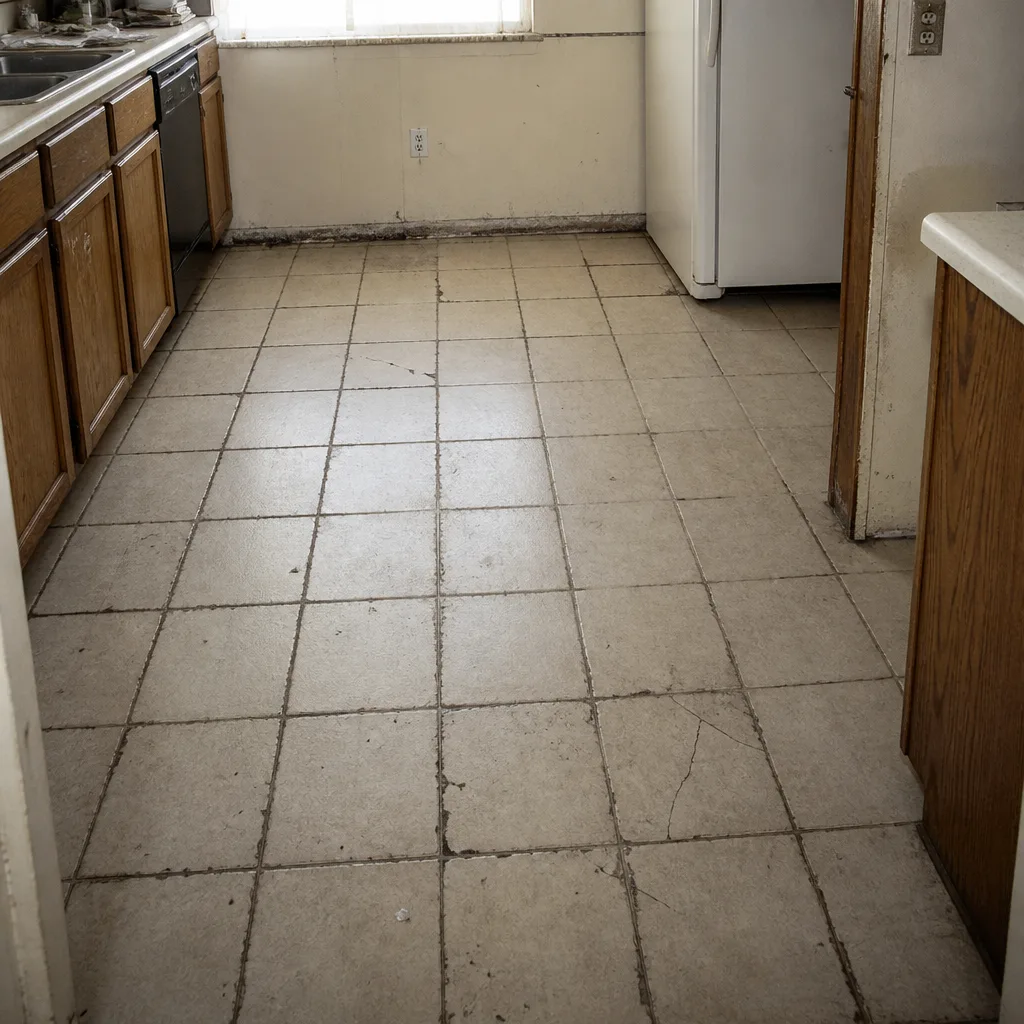 Before
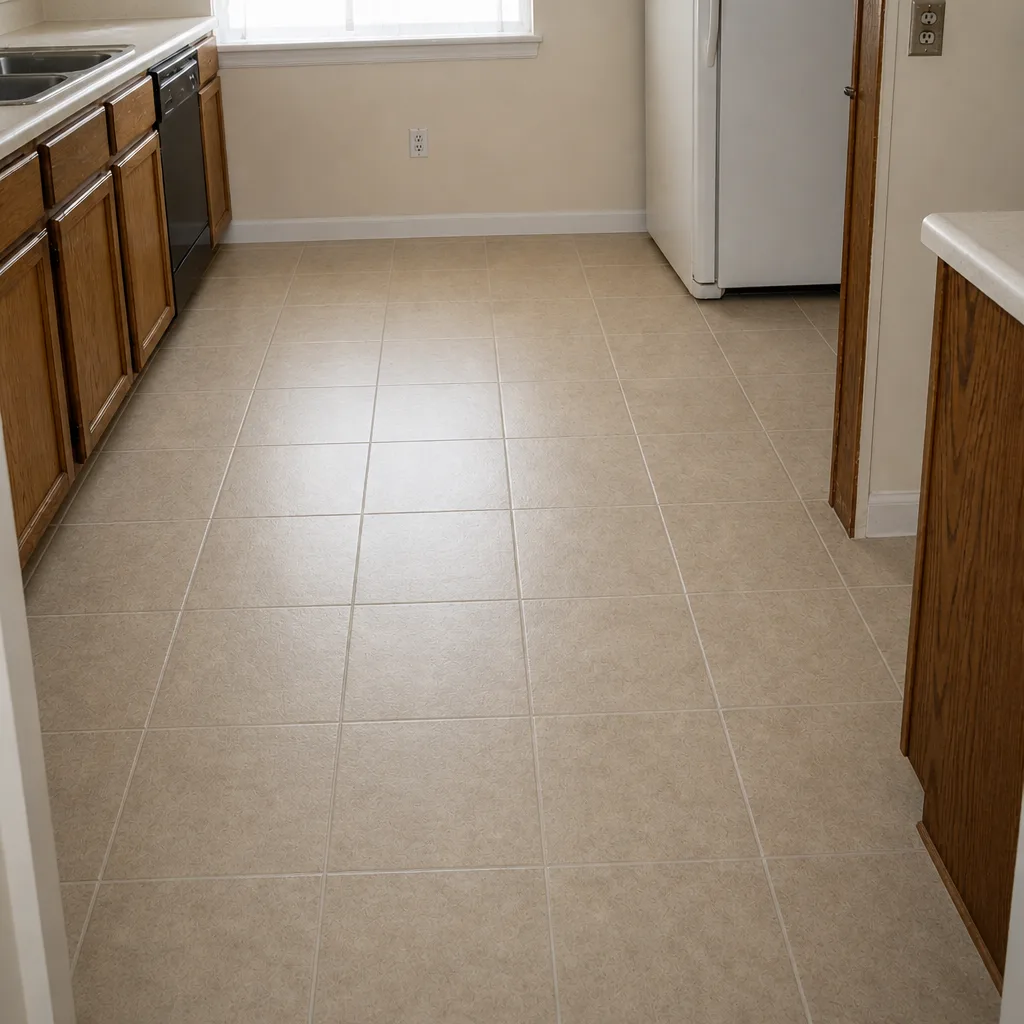 After
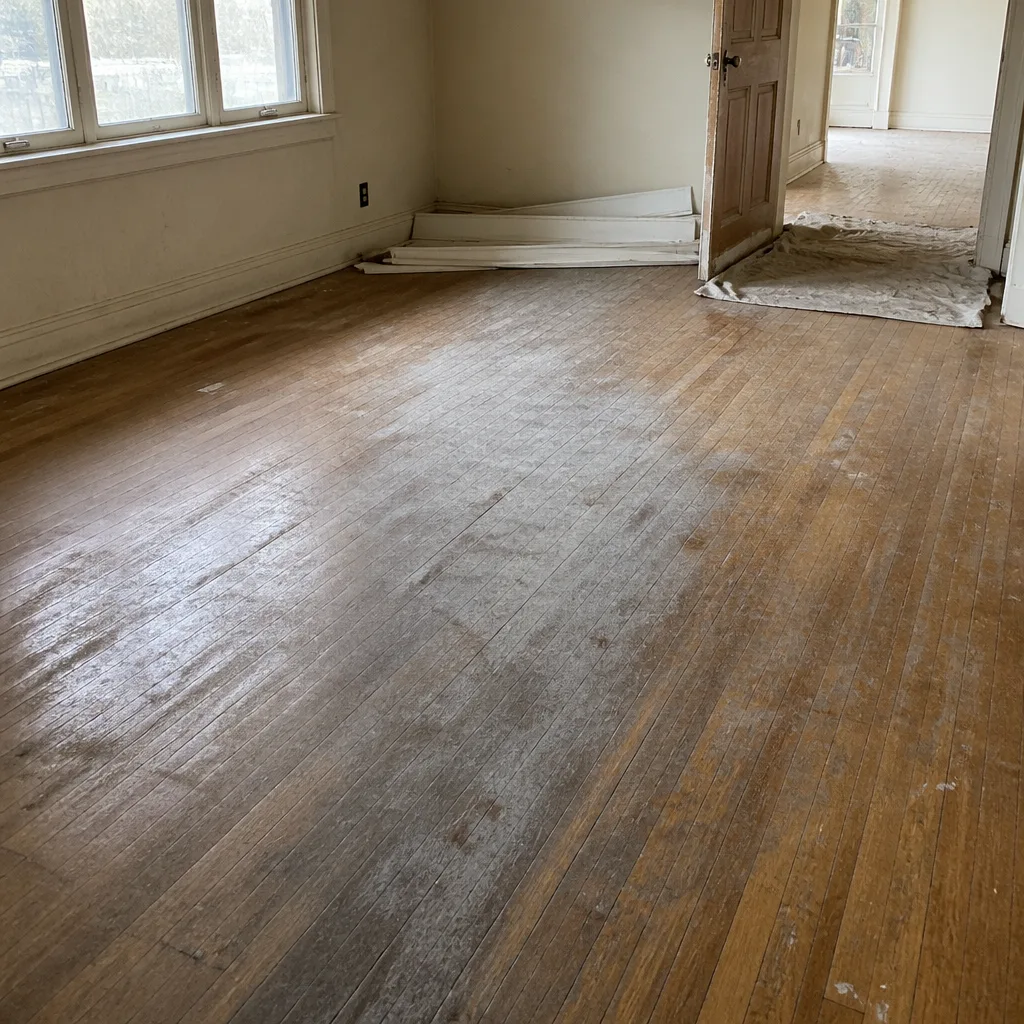 Before
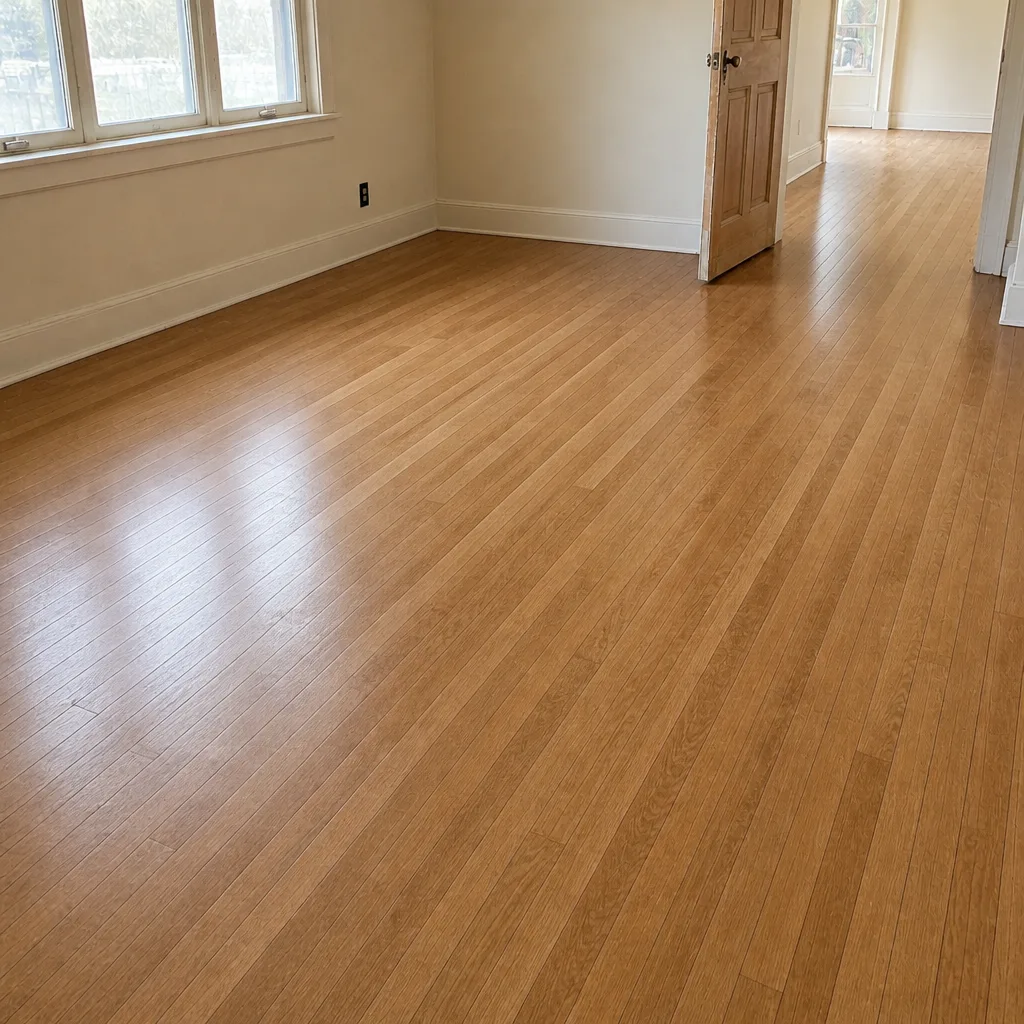 After
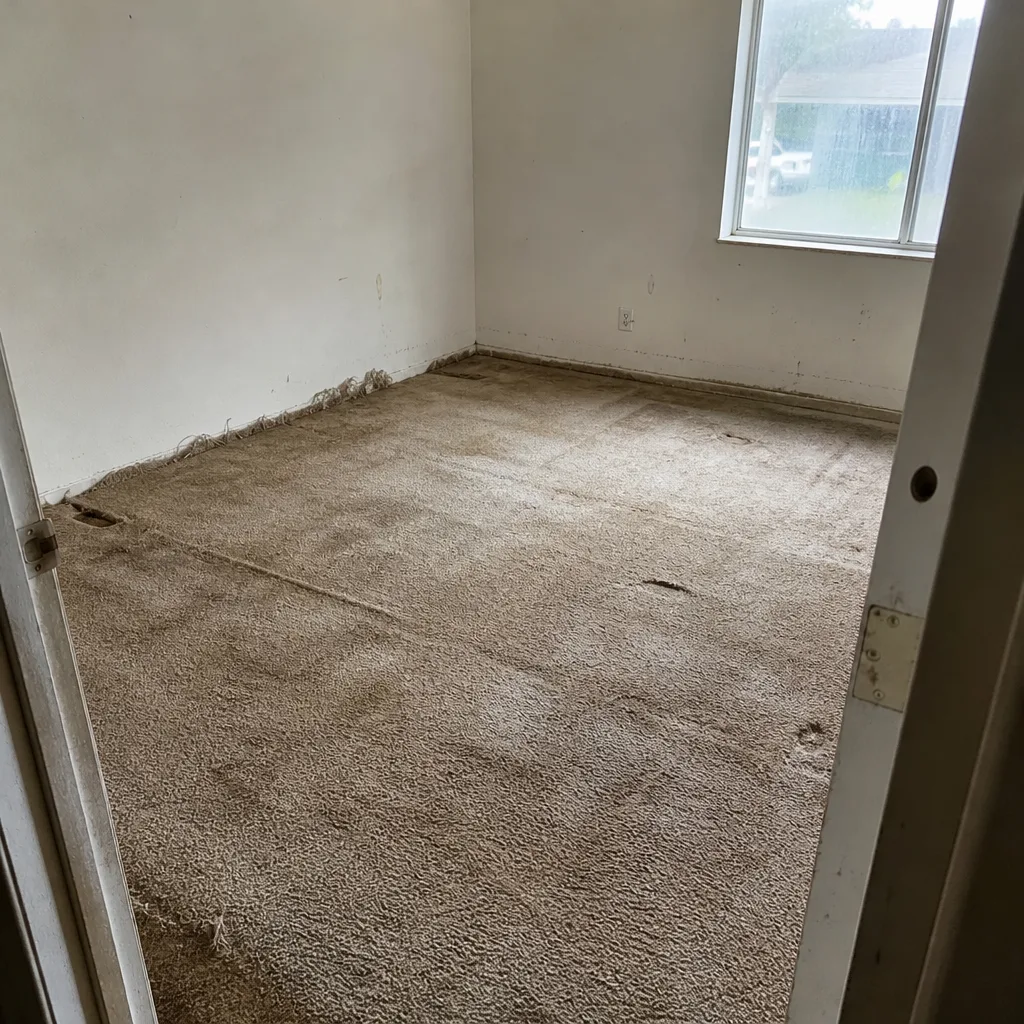 Before
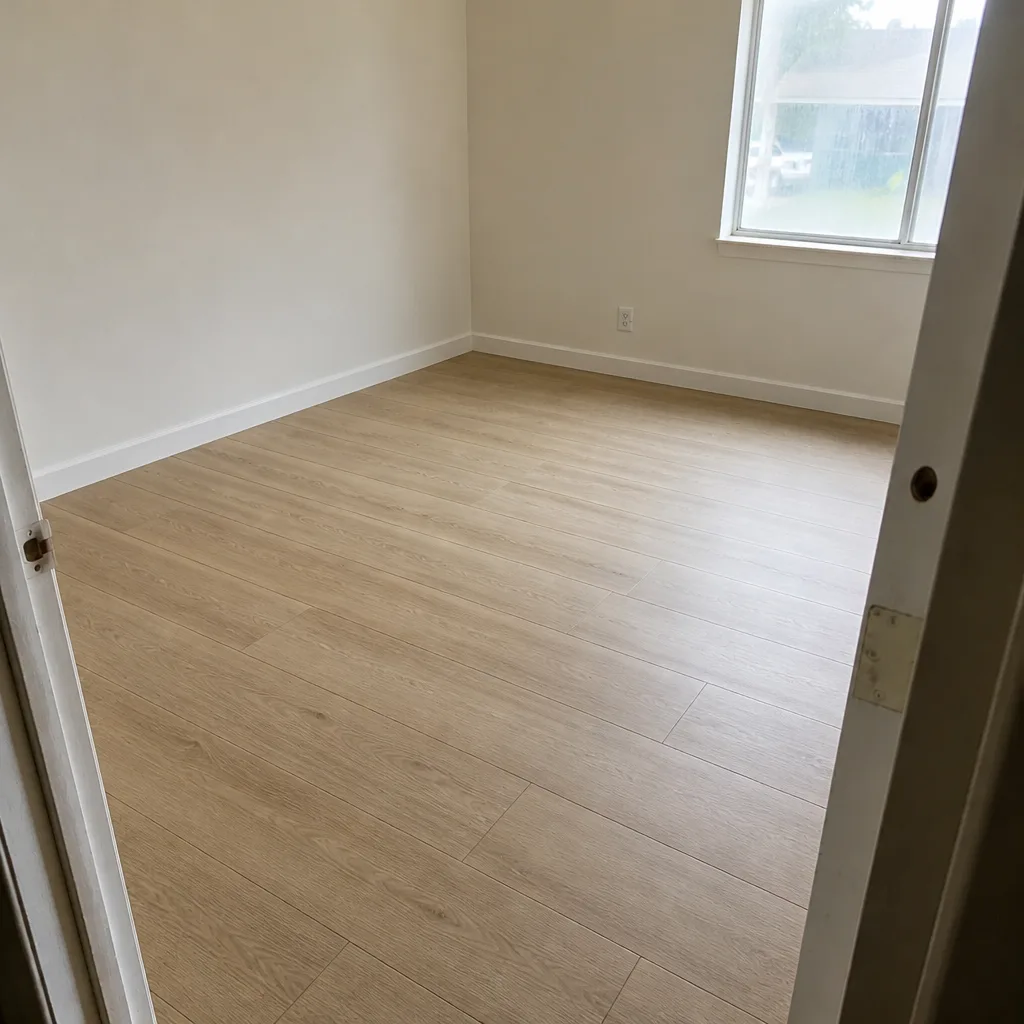 After
When to Call a Professional
If you’re planning a whole-home floor update, considering tile in a wet area, or ready to refinish an existing wood floor, this is where we come in. Refinishing is often the smarter move than replacement for a wood floor that’s worn but structurally sound – it’s more cost-effective than full replacement and it preserves the character of the original floor. Whether a floor can be refinished depends on the thickness of the wood and its condition, which we check at the estimate. If your current carpet has worn through or a previous install has started to buckle, that’s also worth an in-home look before any material gets ordered.
Flooring Boulder City offers free estimates in Boulder City. We start with an in-home measure, then give you a written price per job, then book an install day. Call (833) 842-8455 to schedule yours. We answer 24/7. Fast dispatch from 7am to 7pm, Sunday through Friday.
Frequently Asked Questions
Luxury vinyl plank and porcelain tile are the two most climate-compatible choices for a Boulder City home. Both stay stable through dry air and wide daily temperature swings, and both handle a slab foundation without the dimensional problems solid wood can develop. Engineered hardwood is a close third if you want the look of real wood. Carpet works well in bedrooms and other shaded, low-traffic rooms. Call (833) 842-8455 for an exact quote on the floor you’re considering – estimates are free.
Yes, solid hardwood commonly gaps in Boulder City because the low humidity pulls moisture out of the wood and the planks shrink. Small gaps are normal and can be consistent with the season, but wide, dark seam lines usually mean the wood has moved beyond what the install anticipated. Engineered hardwood and LVP handle the same climate with less movement. Whether an existing gapped floor can be refinished depends on the thickness of the wood and its condition – we check that at the estimate. Call (833) 842-8455 to schedule one.
It does, and it’s one of the most overlooked factors in Boulder City installs. Summer days above 110°F and nights in the 60s create a daily swing of more than 50°F, which means floating floors need genuine room to expand at every edge. Installing a plank tight to a wall, doorframe, or cabinet toe-kick is how buckling starts. A proper estimate addresses the expansion gap at the perimeter and at every transition. Call (833) 842-8455 for a written estimate that covers it.
No – tile is one of the most climate-compatible floors you can install here. It doesn’t care about humidity, it doesn’t warp or gap in dry air, and its thermal mass actually helps keep shaded rooms comfortable. Grout joint sizing matters in our heat because the joints give the tile field room to move, so the specification should match the tile and the room. Daltile porcelain is a strong starting point. Call (833) 842-8455 to talk through tile for your home.
Yes. Even in a dry climate, concrete pulls moisture vapor up from the soil below, and that vapor rises into whatever floor sits on top of the slab. A vapor barrier or moisture-rated underlayment is often specified for exactly this reason, and the slab should be assessed before install. Skipping the check is the most common reason floor installs fail in Boulder City. Call (833) 842-8455 to schedule a free estimate.
Refinishing is usually the better option when the wood is sound and the wear is on the surface, because it costs less than full replacement and extends the life of the floor you already have. Whether it’s possible depends on the thickness of the wood and its condition, and no one can tell you that reliably until they see the floor. We check at the estimate and give you a written recommendation either way. Call (833) 842-8455 to schedule one.
The Bottom Line
Boulder City’s climate isn’t a flooring obstacle – it’s a specification. Four inches of rain a year, summer highs above 110°F, a 50°F daily temperature swing, and slab foundations add up to a set of conditions that reward the right product and punish an install that ignores them. Solid hardwood can work here, but it needs help. Engineered hardwood, luxury vinyl plank, and porcelain tile do the same job with less risk. And workmanship – the vapor barrier, the expansion gap, the grout joint – is what makes any of them last. The right floor for Boulder City is the one matched to the room and installed right the first time. Call (833) 842-8455 to schedule your free estimate. We answer 24/7. Fast dispatch from 7am to 7pm, Sunday through Friday.
Written by the team at Flooring Boulder City.