
Last updated November 18, 2026
 Hardwood
 Engineered hardwood
 Luxury vinyl plank
 Laminate
 Porcelain tile
 Carpet
 Shaw
 Mohawk
 COREtec
 Pergo
Free in-home measure and written estimate: Shaw, Mohawk, COREtec and Pergo lines compared on your own rooms, with carpet, tile, vinyl plank, laminate and hardwood laid out side by side
Get your free estimateFlooring Installation Questions to Ask Before You Sign
Most flooring disputes don’t start with bad materials or sloppy work. They start with a conversation that never happened. A homeowner asks about price, hears a number, and signs. Weeks later there’s confusion about who moved the furniture, who patched the subfloor, why the transitions don’t match, and who’s responsible when a plank lifts at the doorway. The paperwork is thin, the answers were verbal, and now the fix feels expensive. Nevada’s contractor dispute process is slow, and the fastest route to a resolution after a flooring failure is usually a civil claim under $10,000 in small claims court. That’s why the questions you ask before signing protect you more than any warranty document you collect afterward. This guide covers what to ask, why each question matters, and what a good answer sounds like from a Boulder City flooring contractor.
Quick Answer
The questions that matter most before signing a flooring contract are about verification, scope, warranty, timeline, and change orders. Ask for the contractor’s Nevada State Contractors Board license number and verify it yourself, get a written itemization of subfloor prep and debris removal, separate the manufacturer warranty from the labor warranty in writing, confirm who actually crews the job and what happens if materials are delayed, and put the change order process in the contract. If any of those five areas gets a vague answer, you’re looking at a future invoice dispute, not a discount.
Styles & brands we work with
- Hardwood
- Engineered hardwood
- Luxury vinyl plank
- Laminate
- Porcelain tile
- Carpet
- Shaw
- Mohawk
- COREtec
- Pergo
Table of Contents
- How Do You Verify a Flooring Contractor’s License in Nevada?
- What Should the Scope of Work Actually Itemize?
- How Do You Separate Manufacturer Warranty From Labor Warranty?
- What Should You Ask About Timeline, Crews, and Delays?
- How Does a Change Order Process Protect You?
- Which Flooring Questions Are Specific to Boulder City Homes?
- What Should Happen at the Free Estimate Visit?
- What Payment and Contract Terms Should Raise a Flag?
How Do You Verify a Flooring Contractor’s License in Nevada?
You verify a Nevada flooring contractor by pulling their license number from the Nevada State Contractors Board website yourself, not by trusting a photo of a card. Anyone can print a card. The state database is the only version of the truth that matters, and it takes about two minutes to check.
Here’s the step-by-step process:
- Ask the contractor for their Nevada State Contractors Board license number in writing, ideally on the written estimate.
- Go to the Nevada State Contractors Board website and use the license lookup tool.
- Confirm the license is active, not suspended or expired.
- Confirm the license classification matches the work: flooring installation and refinishing fall under specific classifications, and a license for one scope doesn’t automatically cover another.
- Check the listed business name and address against what’s on your contract.
- Look for any disciplinary actions or complaints on record.
- Ask for a current certificate of insurance for general liability and workers’ compensation, and call the insurer to confirm it’s active.
The insurance piece matters as much as the license. If an uninsured worker gets hurt in your home, or a crew damages something and there’s no liability coverage, you can end up in the middle of it. When our technicians walk a Boulder City home, part of that visit is confirming what the floor actually needs before anyone talks about a contract, and licensed, insured status is table stakes for us to be there in the first place.
Ask the question twice, too. Once when you first meet, and again when you’re handed the estimate. A contractor who hesitates on the second ask is telling you something.
What Should the Scope of Work Actually Itemize?
A scope of work should itemize every step that touches your home, not just the square footage and the product. If the estimate says “flooring installation – $X” with nothing underneath, you don’t have a scope. You have a headline.
Specifically, the scope needs to break out:
- Subfloor prep. “Prep included” is not an answer. What does prep include: scraping old adhesive, grinding high spots, patching low spots, replacing damaged plywood, checking moisture? Each of those is a different job with a different cost, and each one can add a line to your final invoice if it wasn’t defined.
- Old material disposal. Who hauls away the carpet, the vinyl, the tile, and the underlayment, and who pays the dump fee? Confirm this in writing, because dump fees are separate from labor and they get passed along if the contract is silent.
- Furniture moving. Does the crew move your furniture, or do you? For a whole-room project, that’s a real question. For whole-home, it’s a scheduling question.
- Trim and transitions. Baseboards pulled and reinstalled? Quarter round added? Transition strips at doorways and where flooring meets a different surface? Thresholds at exterior doors? Each of these is a line item, and each one is a place a vague contract turns into a surprise charge.
- Toilet and appliance handling. In bathrooms and kitchens, who pulls and resets the toilet, the dishwasher, the fridge, and the gas range? Resetting a toilet is not the same job as pulling it.
- Door clearances. Thicker flooring can prevent a door from clearing, and door trimming or adjustment needs to be in the scope or explicitly excluded.
Ask for the scope in writing and read it against the estimate. We carry carpet, tile, and hardwood products from Shaw, Mohawk, and Daltile among others, and the material choice changes what prep looks like. Carpet over a padded subfloor is a different prep job than tile over a concrete slab. A contractor who can’t explain the difference in writing hasn’t thought it through. If you’re comparing approaches, our guide to tile flooring installation walks through what tile prep actually involves.
How Do You Separate Manufacturer Warranty From Labor Warranty?
Manufacturer warranty and labor warranty are two different documents covering two different things, and a contractor who only talks about “the warranty” is blending them on purpose or by habit. Ask for both separately, in writing, before you sign.
The manufacturer warranty covers the product: the planks, the tile, the carpet fiber. It typically runs through the manufacturer, requires proof of purchase, and often requires the product to have been installed according to the manufacturer’s installation instructions. That last clause matters. If the installer deviated from the instructions, the manufacturer can deny a claim. So the product warranty depends on the installation, and the installation depends on the labor warranty.
The labor warranty covers the workmanship: lifting planks, failed seams, cracked grout lines, gaps at the perimeter, transitions that come loose. That warranty comes from the contractor, not the manufacturer, and it’s the one you’re most likely to need. When a floor fails, it’s usually at a seam, a transition, or a perimeter, and those are workmanship issues.
Questions to ask:
- What does the labor warranty cover, specifically, and what does it exclude?
- How long does the labor warranty run, and does it transfer if you sell the home?
- What’s the remedy: repair, replacement, or refund?
- Do you require the manufacturer’s installation instructions be followed, and can you show me where they’re referenced in your scope?
- If I need warranty service, who do I call, and how long should I expect to wait?
A contractor who won’t put a labor warranty in writing is a risk regardless of price. Any price. A written labor warranty is a contractor’s willingness to stand behind the work, and it costs them nothing to provide if they’re confident. If they won’t, ask why, and listen carefully to the answer.
What Should You Ask About Timeline, Crews, and Delays?
Ask who starts the job, who finishes it, and what happens if materials don’t show up. Those three questions catch most of the scheduling problems that turn a two-day project into a two-week disruption, and they’re almost never asked before signing.
Who runs the crew? Ask if the same crew that starts your job will finish it. Some operations rotate crews by schedule, which means the person who pulled the baseboards is not the person who lays the last transition strip. That’s not automatically a problem, but you should know it going in, and you should ask how handoffs are handled.
What happens if materials are backordered? Flooring products do go out of stock, especially specialty tile or a specific LVP colorway. Ask what the contractor’s policy is: do they notify you immediately, offer an alternative, or wait and hope? What happens to your schedule deposit? What’s the delay compensation policy, if any?
What’s the completion timeline, and what’s excluded from it? A written start date and a written completion date, not a range that slides. And check what the timeline assumes: no hidden subfloor damage, materials on site before day one, access to the room. If a contractor won’t commit to a timeline in writing, they’re building in an escape hatch.
How does the crew leave the house each day? Floors being installed means rooms are unlivable. Ask how they protect adjacent surfaces, where materials and tools are stored, and how dust is controlled. Tile work is dusty. Refinishing hardwood produces fine dust. The answer tells you how much cleanup you’ll be doing afterward.
Hardwood refinishing has its own scheduling logic, because the floor has to be sanded, finished, and left to cure. If your existing floors are a candidate for refinishing rather than replacement, ask about the refinishing schedule separately. Our overview of Flooring Boulder City covers the three services we provide, and refinishing is a different timeline than a new install.
How Does a Change Order Process Protect You?
A change order process protects you by converting every scope change into a written, priced, signed document before the work happens. Without one, mid-project changes happen verbally, the price shifts, and nobody agrees on what was agreed. That’s the setup for almost every flooring invoice dispute we hear about.
Ask the contractor directly: what triggers a written change order? A good answer is specific. It includes:
- Any change to the product, color, or material.
- Any discovered condition that changes the prep: soft subfloor, water damage, uneven slab, unexpected adhesive.
- Any addition to the scope: extra trim, a closet added, a room the original estimate excluded.
- Any change in timeline caused by the homeowner: access delays, furniture not moved, finish selections late.
Then ask how the change order gets priced. Is it a flat rate, an hourly rate plus materials, or a per-item rate? Is there a threshold below which small adjustments happen without paperwork? A contractor who resists formalizing scope changes mid-project is signaling a future invoice dispute. That resistance usually shows up as “we’ll just handle it” or “don’t worry about it.” Don’t accept that. A written change order protects both sides, and a contractor who’s done this work long enough will have a form ready.
One more question: what happens if a change order is needed and you’re not available to sign? Ask whether work stops, whether the change is priced and held, and how quickly you need to respond. Contractors who can’t answer that have never thought about it, and that’s information.
Which Flooring Questions Are Specific to Boulder City Homes?
Boulder City flooring has to survive intense desert sun, very low indoor humidity through much of the year, and wide swings in temperature between day and night. That’s not a sales angle, it’s a materials question, and the contractor you hire should be able to answer how each product behaves in those conditions.
Specific questions to ask:
- How does this product handle low humidity expansion and contraction? Solid hardwood moves with seasonal moisture changes. Engineered hardwood and luxury vinyl move less. The product you choose should match the room’s exposure to dry air, and the contractor should be able to explain why.
- Is this room exposed to direct sun through a window most of the day? UV exposure fades some floors over time, and the answer affects what’s recommended. Ask what the product’s lightfastness is and whether window coverings are worth planning for.
- How is the concrete slab or subfloor moisture tested before installation? Desert homes still have slab moisture, and a contractor who skips the test is gambling with your floor. Ask what test they use and whether the result goes in writing.
- What’s the acclimation plan for this product in this house? Acclimation time depends on the product and the home, and the manufacturer’s instructions are the authority. Ask how the contractor confirms the material is acclimated before install begins.
- What’s the recommendation for rooms that see heavy foot traffic? Boulder City homes often have a primary living area that sees constant use. Water-resistant, scratch-resistant options like COREtec or LifeProof LVP are worth asking about, and so is Karndean for a designer look with commercial-grade durability.
We install and service the floors homeowners choose, and the right floor for how the room actually lives beats any single brand recommendation. If you’re weighing soft vs. hard surfaces, our guide to carpet installation covers how carpet fits into a desert home’s room mix. For general guidance on the town itself, see Boulder City.
What Should Happen at the Free Estimate Visit?
A good free estimate visit is a floor inspection, not a sales pitch. The contractor should walk the rooms, measure, check the subfloor, and ask how the space is used. If the visit is all about closing a deal, that’s a sign the installation details haven’t been considered yet.
Here’s what to expect on a well-run visit:
- Measure each room and note doorways, transitions, and closets.
- Check the existing subfloor for levelness, damage, moisture, and what’s under the old flooring.
- Ask about pets, kids, foot traffic, and sun exposure for each room.
- Discuss product options honestly, including the trade-offs.
- Explain what subfloor prep might be needed and how that gets priced.
- Leave you with a written estimate that itemizes scope, materials, and labor.
The written estimate sets the final price. Ask how long the estimate is valid, whether the price includes disposal and trim, and whether there’s any line that could grow based on what’s found during installation. If the answer to that last question is “we’ll see,” get it in writing instead.
The estimate should be free, and it should be in writing. If a contractor charges for a measure, ask why, and if they won’t put the price in writing, walk away. Nothing about a flooring installation should be verbal, ever.
What Payment and Contract Terms Should Raise a Flag?
Any contract asking for a large deposit before work begins, or full payment before the job is finished, should raise a flag. Standard practice in flooring is a deposit at signing, a progress payment when materials arrive, and the balance due after the walkthrough. If a contractor wants the entire amount up front, ask why, and be prepared to walk.
Other terms to check:
- Lien rights disclosure. Nevada has rules around mechanic’s liens and pre-lien notices. Ask what documentation you’ll receive and whether the contract references it. This protects you if a subcontractor or supplier doesn’t get paid.
- Right to cancel. Nevada law provides a cancellation window for certain home improvement contracts. Ask the contractor to point out where the cancellation terms are in the contract, and read them before you sign.
- Dispute resolution clause. Does the contract require arbitration? Does it say which state’s law governs? Does it limit where you can file a claim? Read this section carefully, because it affects your leverage if something goes wrong.
- Written warranty delivery. The contract should say when you’ll receive the manufacturer warranty documents and the labor warranty in writing. If it doesn’t, add it before signing.
- Signature authority. Confirm the person signing the contract has the authority to bind the company. A contract signed by someone who isn’t a licensed qualifier for the business is a contract problem.
None of these are reasons to distrust a contractor. They’re standard contract terms, and a contractor who’s organized will have all of them ready to discuss. The ones who get defensive about payment structure and dispute clauses are showing you how a disagreement will go later. The state board complaint process is available, but it’s slow, and the fastest path to a resolution is still a written agreement you can point to.
Common Mistakes to Avoid
- Accepting a verbal scope. If it’s not in the written estimate, it’s not in the contract. “We’ll include the trim” is not a scope item unless it’s on paper with a price next to it.
- Not verifying the license number yourself. A card and a license number are not the same as an active, in-good-standing license in the state database. Look it up.
- Treating the manufacturer warranty as the labor warranty. They cover different things. A product warranty doesn’t fix a seam that failed because of installation, and a labor warranty doesn’t cover a manufacturing defect. Ask for both.
- Skipping the subfloor conversation. In older Boulder City homes, subfloor condition is often the biggest unknown. Ask what happens if soft spots or old adhesive are found, and get the pricing approach in writing before the crew arrives.
- Signing without a change order process. A verbal “we’ll figure it out” mid-project is how a fixed-price estimate grows. Ask how changes get documented and priced before you sign.
- Paying in full up front. A large deposit before work begins, or full payment before the final walkthrough, leaves you with no leverage if something goes wrong.
- Ignoring the timeline in writing. A start date and completion date in the contract matter. A verbal “we’ll be there in a couple weeks” doesn’t hold up if materials are delayed or scheduling slips.
Our technicians have up to 11 years of experience across carpet, tile, and hardwood, and they’ve seen how these mistakes play out on the back end. The pattern is consistent: the jobs that go smoothly are the ones with detailed paperwork, and the disputes almost always trace back to a conversation nobody put in writing.
See the difference
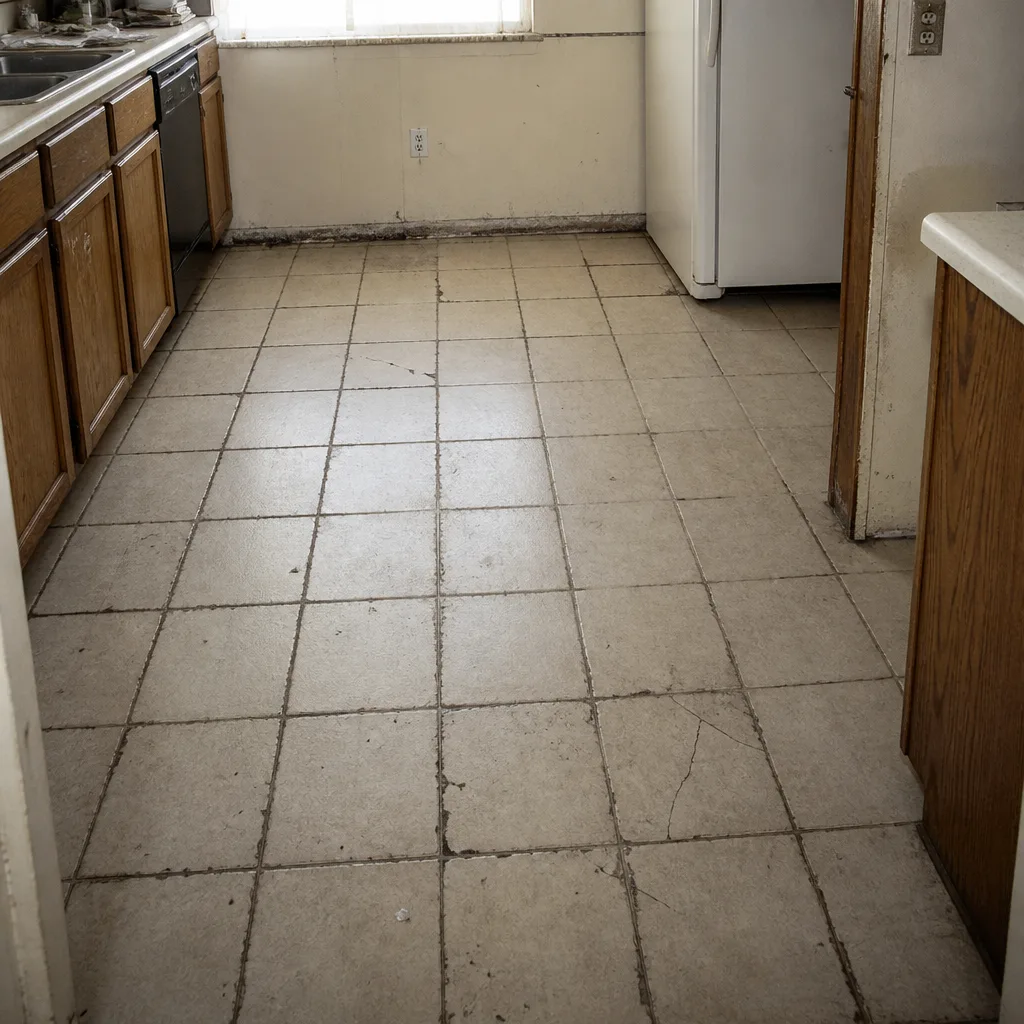 Before
 After
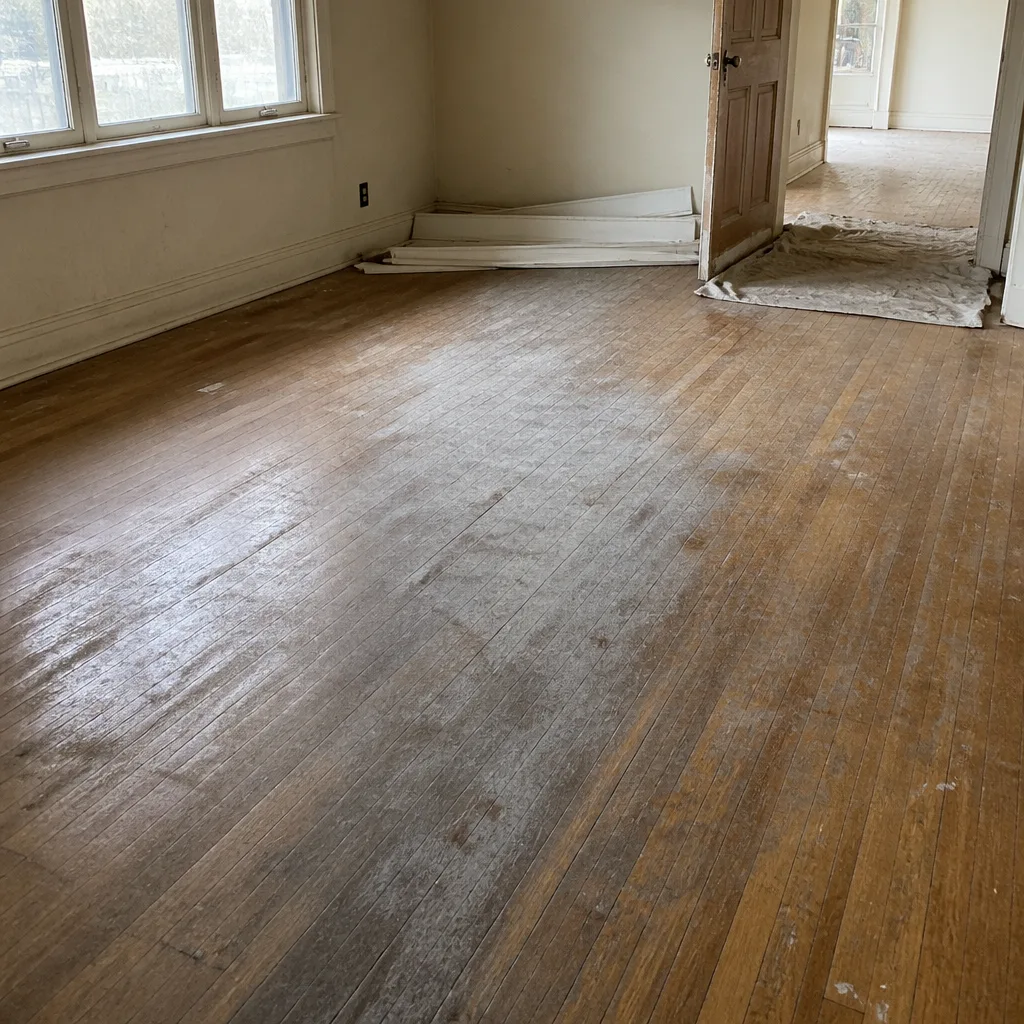 Before
 After
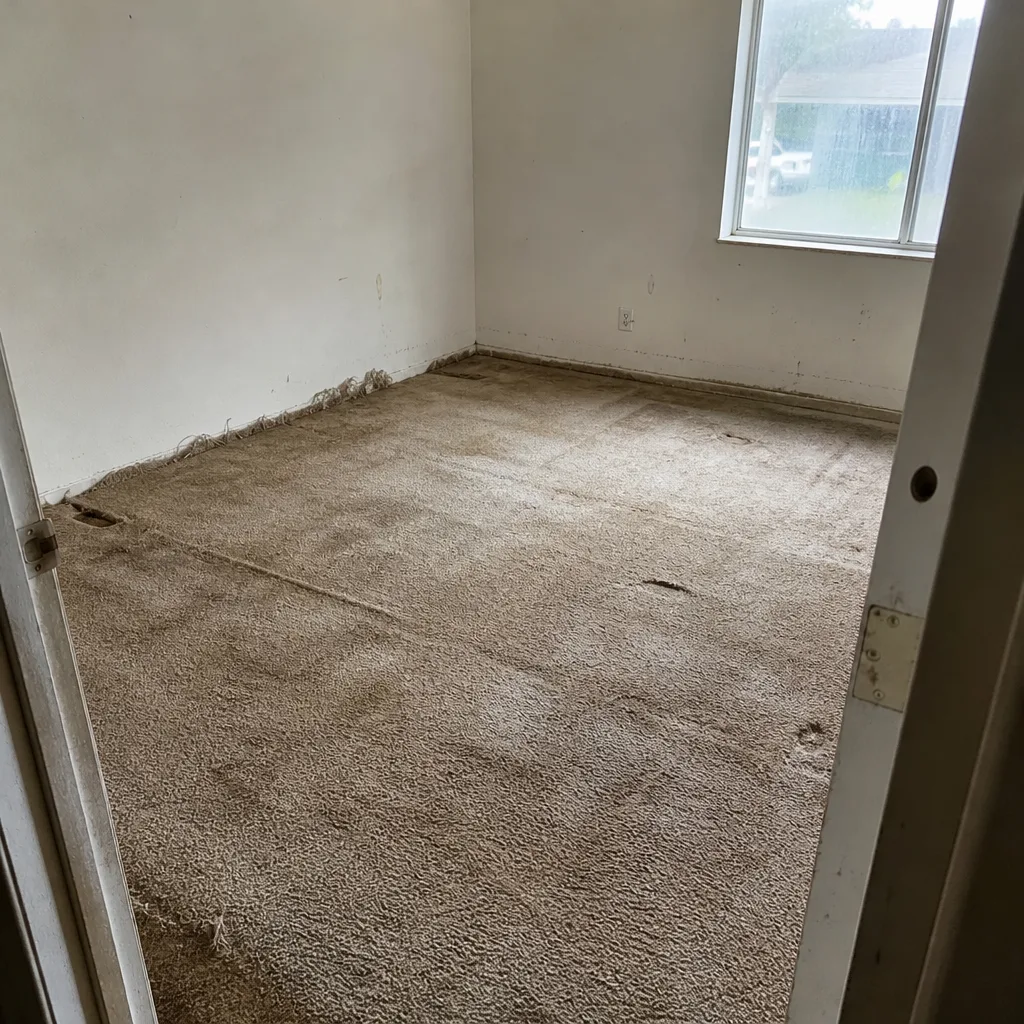 Before
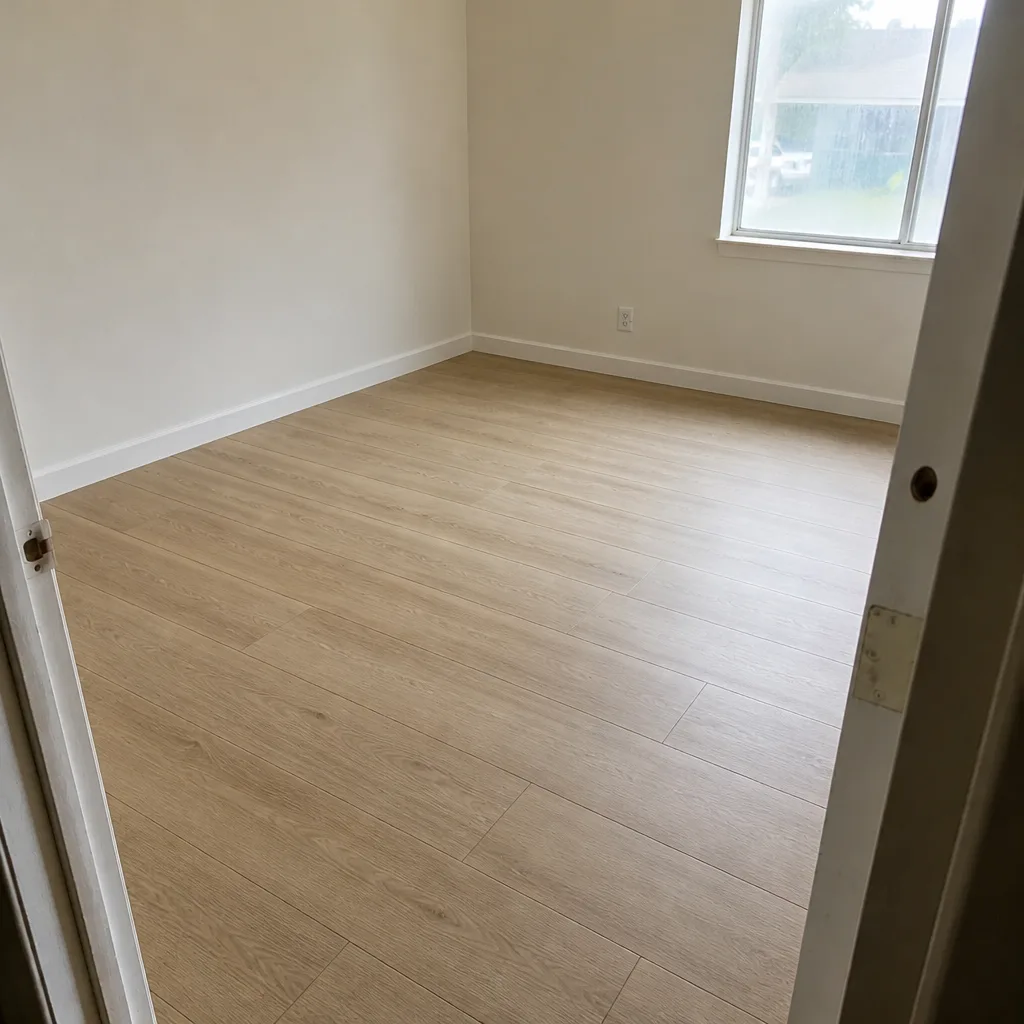 After
When to Call a Professional
Some flooring work is worth pricing out with a professional even if you’re handy. Full-room carpet installation, tile over a large area, and hardwood refinishing are all jobs where the margin for error is narrow, and a bad result is expensive to undo. Subfloor repair, moisture issues, and anything involving a slab are also worth a professional look, because the fix depends on what’s actually under the floor. Hardwood refinishing involves sanding equipment and finishes that need proper handling and ventilation, so it’s a job for a trained crew rather than a weekend rental. If your project is a whole-home flooring update across multiple surfaces, coordinating carpet, tile, and hardwood under one contractor saves you the handoff problems between trades. Flooring Boulder City offers free estimates in Boulder City to walk the rooms, check the subfloor, and put a written scope and price in front of you before you decide anything. Call (833) 842-8455 to schedule your free estimate.
Frequently Asked Questions
You check a flooring contractor’s license by looking up their license number on the Nevada State Contractors Board website yourself. Ask for the number in writing, search it in the state database, and confirm the license is active, the classification matches the work, and there are no disciplinary actions. Then call the insurer to confirm general liability and workers’ compensation coverage are current. Call (833) 842-8455 for a free estimate with a licensed, insured flooring contractor.
A manufacturer warranty covers the product and a labor warranty covers the installation workmanship, and they’re two separate documents. The manufacturer warranty typically requires proof of purchase and installation per the manufacturer’s instructions, and the labor warranty covers issues like lifting planks, failed seams, and loose transitions. Ask for both in writing before signing. Call (833) 842-8455 to get a written scope and warranty discussion for your project.
Subfloor prep on a flooring estimate should itemize the specific steps: scraping old adhesive, grinding high spots, patching low spots, replacing damaged subfloor panels, and checking moisture. “Prep included” with no detail is not a scope item, and it’s the most common place a fixed estimate grows. Ask what happens if the crew finds a condition that wasn’t visible at the estimate. Call (833) 842-8455 to schedule a free measure and estimate where the subfloor gets inspected.
If flooring materials are backordered, the contractor should notify you right away, explain the delay in writing, and offer a resolution: waiting, an alternative product, or rescheduling. Ask about the delay policy before you sign, and get it referenced in the contract along with any deposit refund terms. A contractor without a written backorder policy is improvising. Call (833) 842-8455 for a free estimate and a clear conversation about product availability.
Yes, any scope change mid-project should trigger a written change order that prices the change and gets signed before the work happens. Verbal adjustments are how invoice disputes start, because nobody agrees on what was said. Ask the contractor how they handle change orders, who prices them, and what threshold triggers paperwork. Call (833) 842-8455 to get a written scope for your Boulder City project.
Refinishing is usually worth considering before replacement, and whether your floor qualifies depends on the thickness of the wood and its condition, which gets checked at the estimate visit. Refinishing extends the life of existing wood, and replacement is the option when the wood is too thin or too damaged to sand again. Ask the contractor to assess yours in person. Call (833) 842-8455 for a free estimate in Boulder City.
The Bottom Line
The questions you ask before signing a flooring contract are worth more than any warranty document you collect afterward. Verify the license yourself through the Nevada State Contractors Board. Get a written scope that itemizes subfloor prep, disposal, trim, and transitions. Separate the manufacturer warranty from the labor warranty and put both in writing. Confirm who crews the job, what happens if materials are delayed, and how delays get handled. And make sure the contract spells out the change order process, because that’s where most disputes start. The flooring that goes in right the first time starts with paperwork that’s right before the first board is laid. Flooring Boulder City carries carpet, tile, and hardwood products from Shaw, Mohawk, Daltile, and others, and we install and refinish what homeowners choose. Call (833) 842-8455 to schedule your free estimate. We answer 24/7. Fast dispatch from 7am to 7pm, Sunday through Friday.
Written by the team at Flooring Boulder City.