
Last updated November 18, 2026
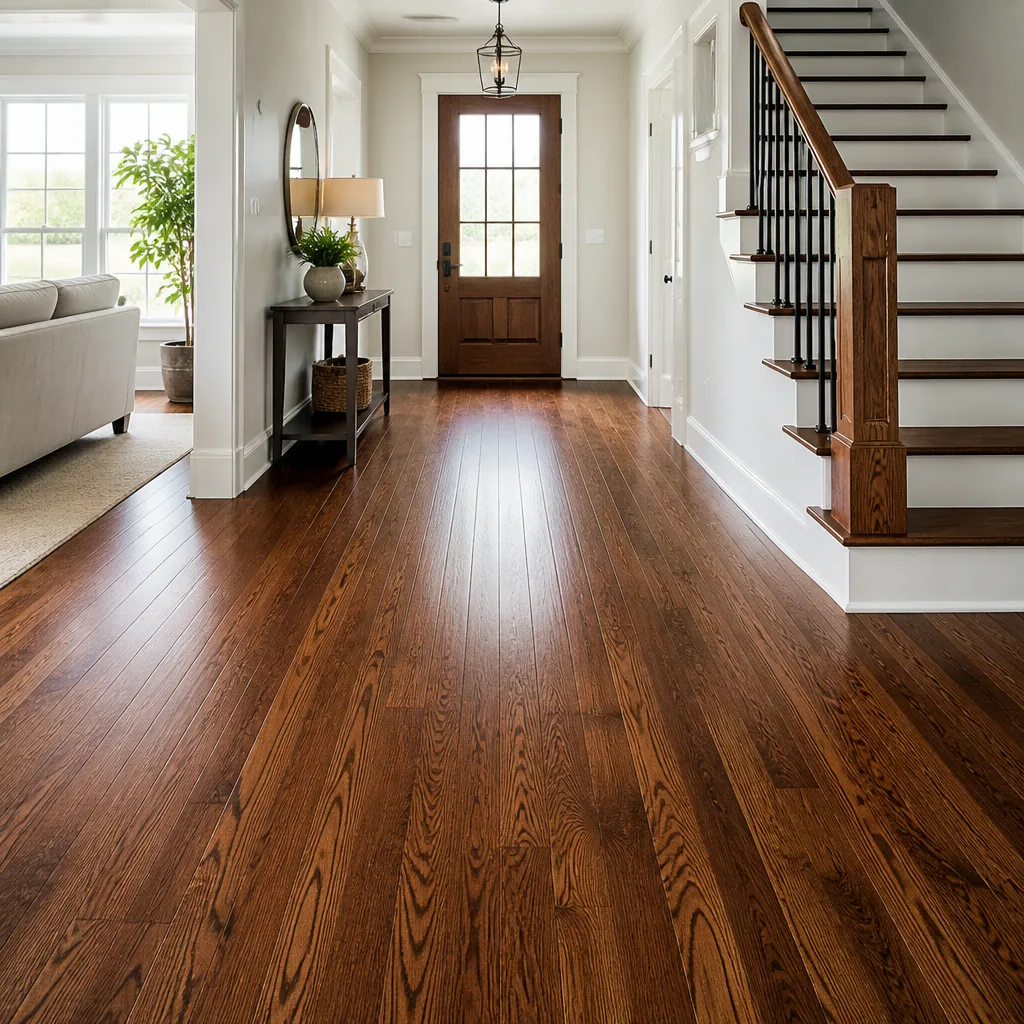 Hardwood
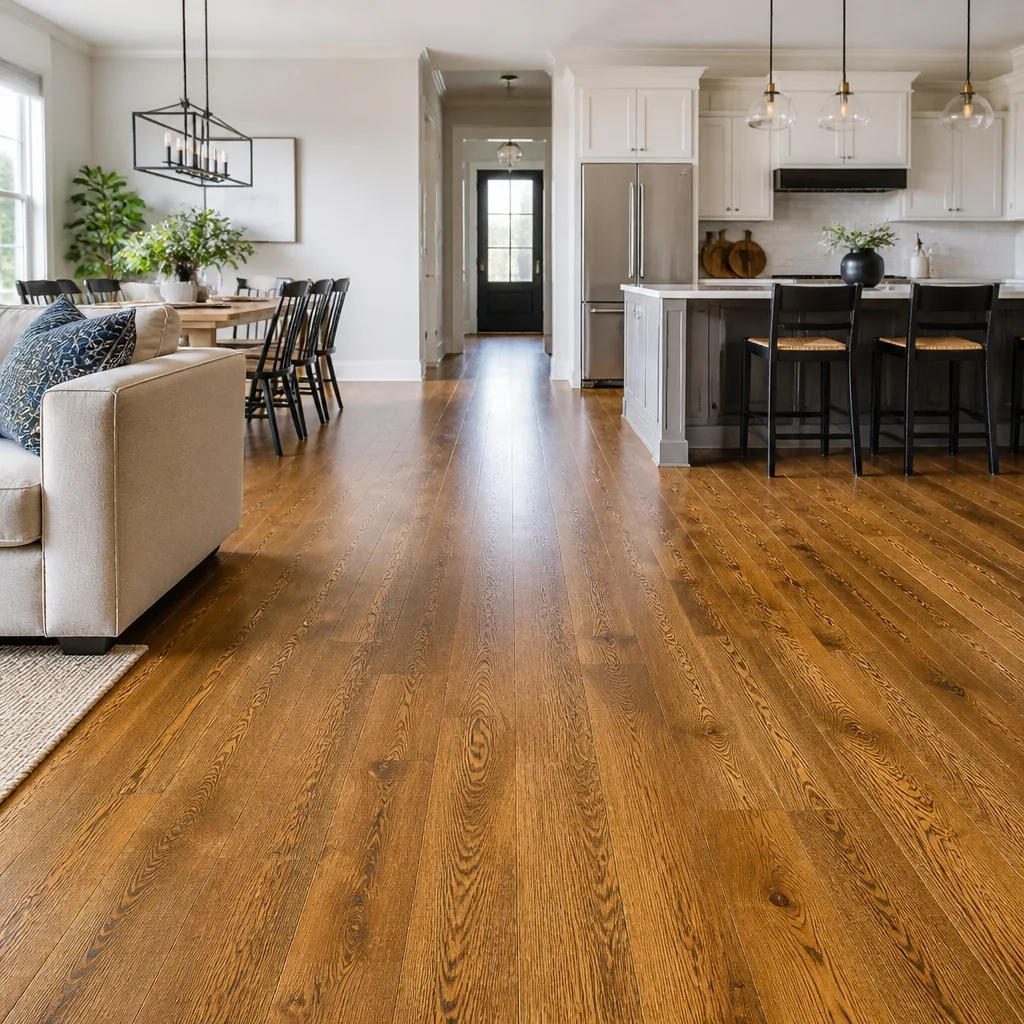 Engineered hardwood
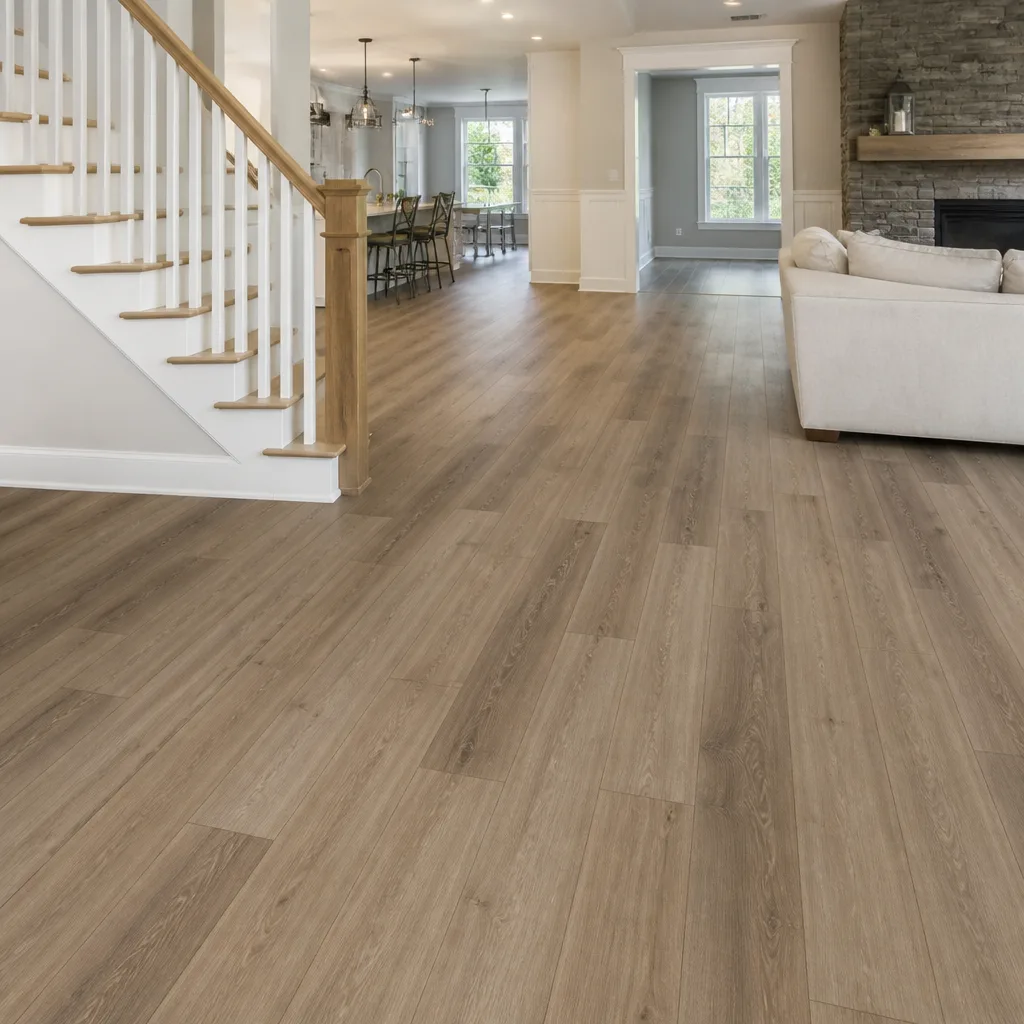 Luxury vinyl plank
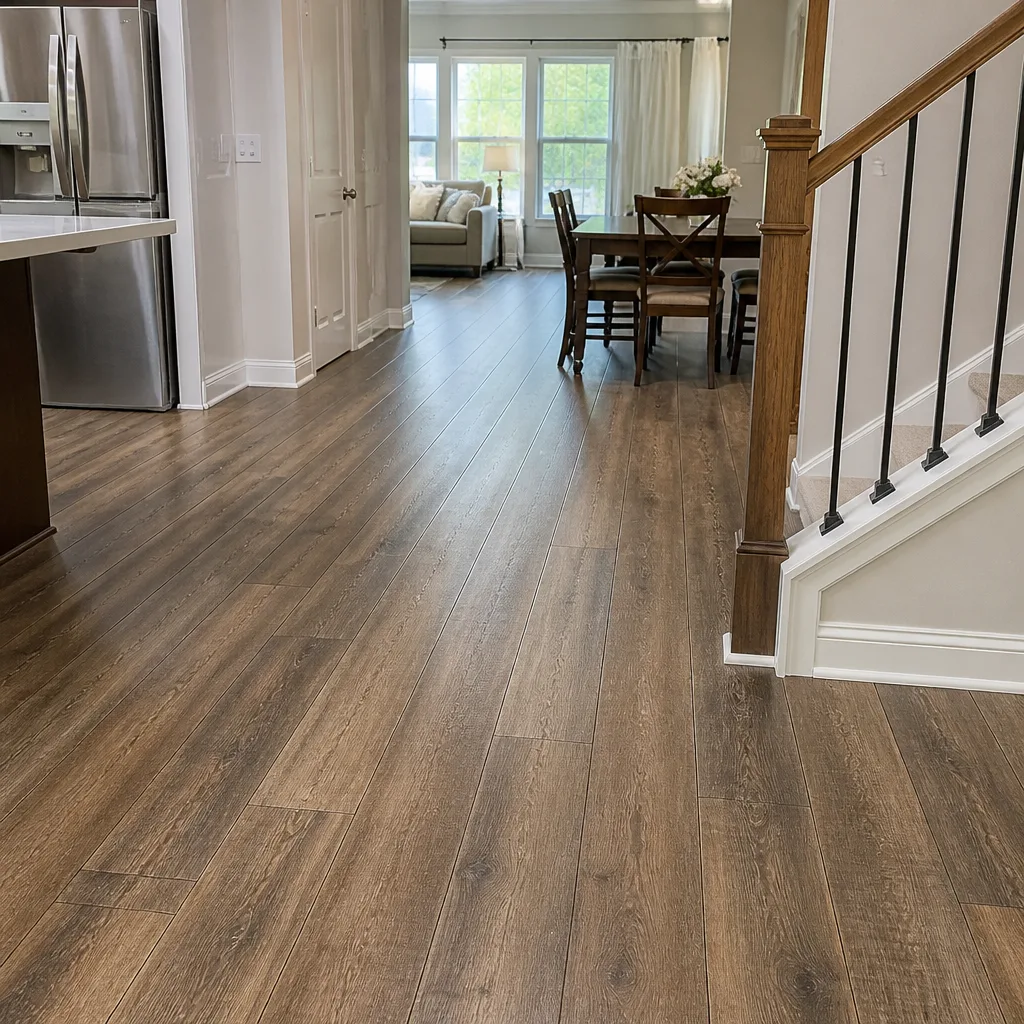 Laminate
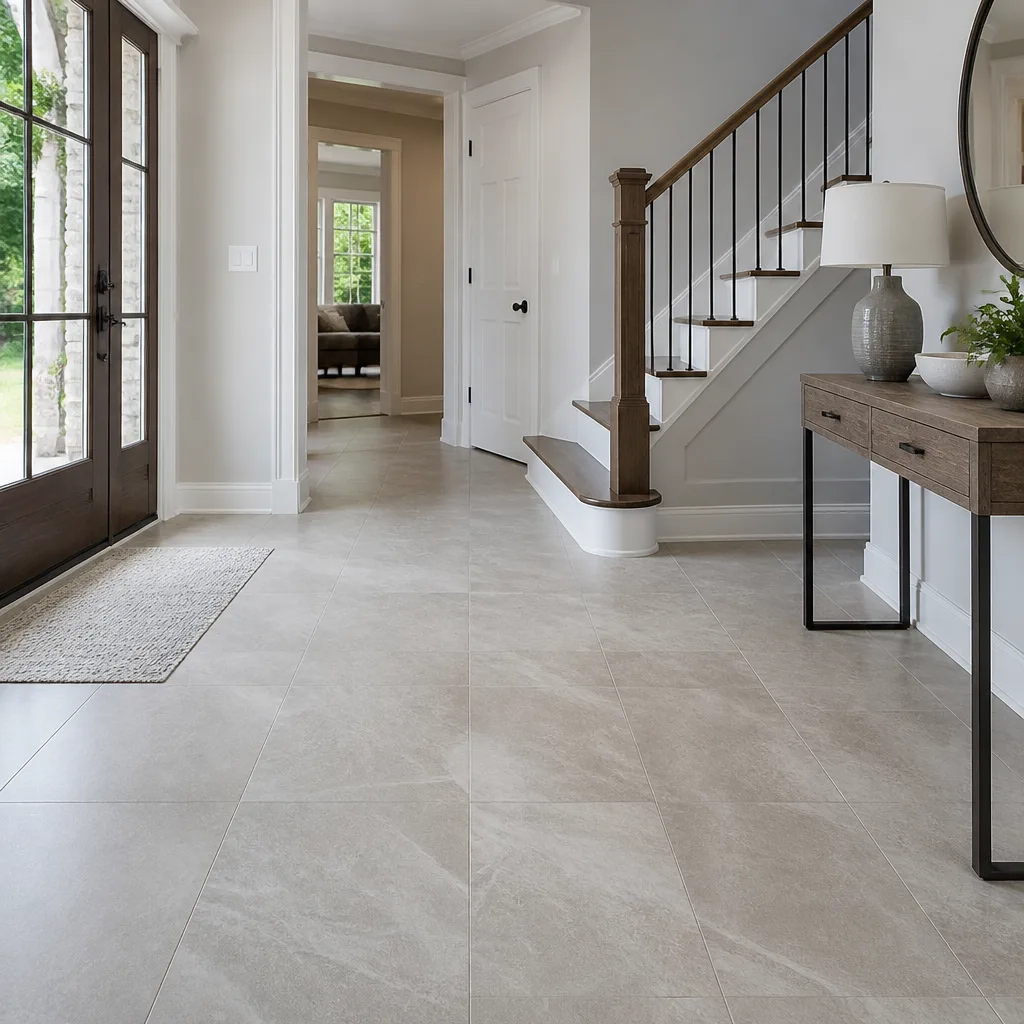 Porcelain tile
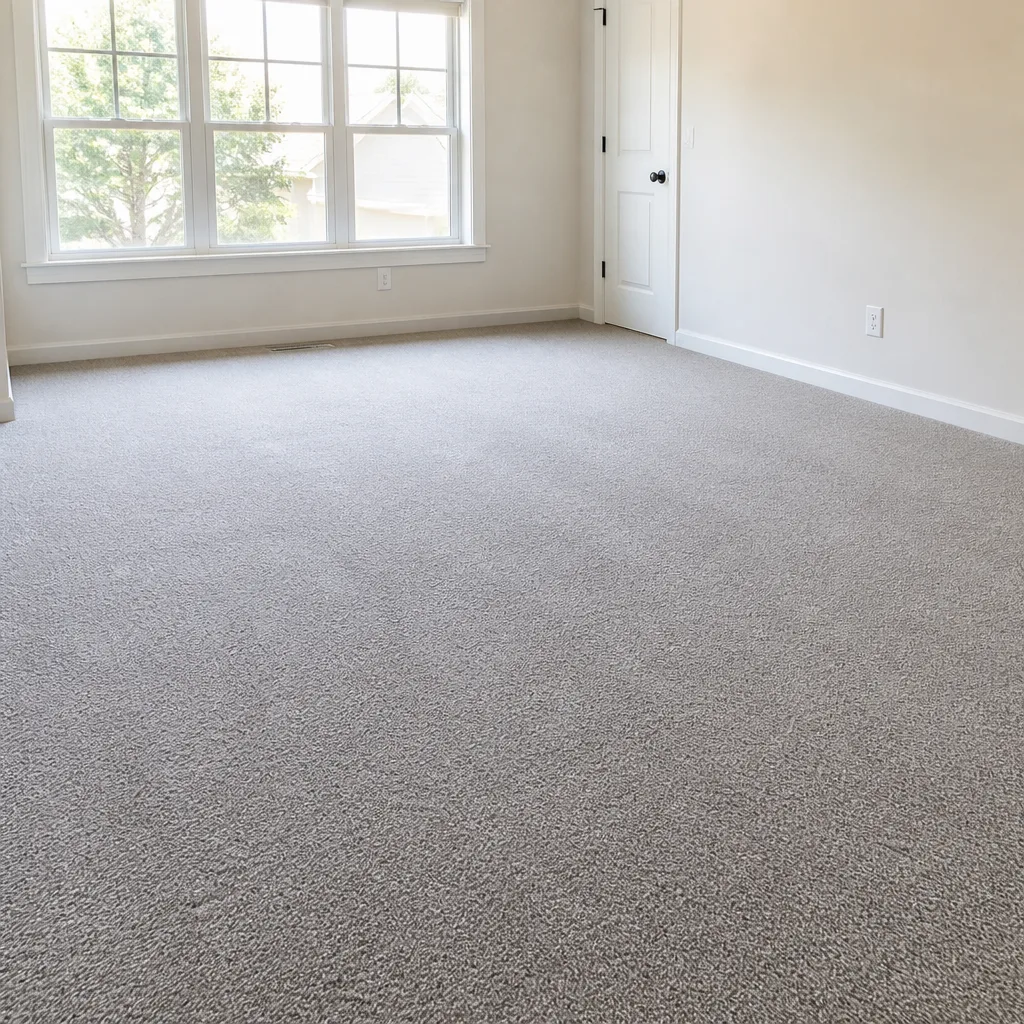 Carpet
 Shaw
 Mohawk
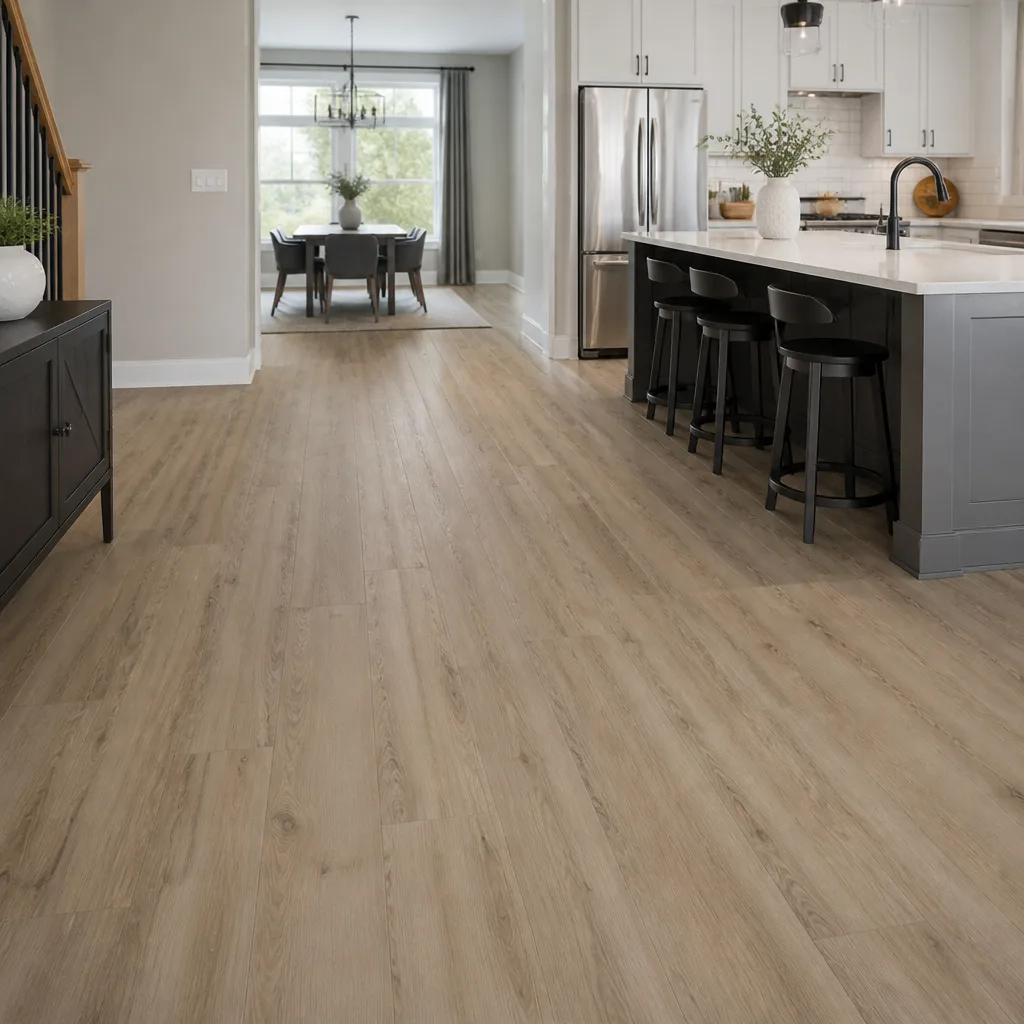 COREtec
 Pergo
Free in-home measure and written estimate: Shaw, Mohawk, COREtec and Pergo lines compared on your own rooms, with carpet, tile, vinyl plank, laminate and hardwood laid out side by side
Get your free estimateFix It or Start Over: Flooring Repair vs Replacement
Most homeowners walk into this decision assuming repair is the budget-friendly answer and replacement is the last resort. That assumption is wrong often enough to matter. On some floors the repaired patch can’t be matched, so the cost climbs past the price of starting fresh. On others, replacement is money spent before it needs to be spent, because a refinish would have bought years more life. What actually decides it is floor age, subfloor condition, and what you’re trying to match against, not how big the damaged area looks. This guide walks through each variable so you can read your own situation and know which way it leans in Boulder City.
Quick Answer
Repair is usually the right call when the damage is small, the material is still available or can be blended invisibly, and the subfloor underneath is solid, while replacement is the right call when the floor is worn across the whole surface, the product is discontinued, or the real damage lives under the floor. For hardwood, a professional refinish is often the middle path: it restores the surface without pulling up the floor, as long as the wood is thick enough and in sound enough condition to sand again.
Styles & brands we work with
- Hardwood
- Engineered hardwood
- Luxury vinyl plank
- Laminate
- Porcelain tile
- Carpet
- Shaw
- Mohawk
- COREtec
- Pergo
Table of Contents
- The Matching Problem: Why Partial Repairs Get Visible Fast
- Subfloor Damage: The Hidden Variable You Can’t See
- Repair Thresholds by Material: Carpet, Tile, Hardwood, and LVP
- Refinish Before You Replace: When Hardwood Makes Sense
- The Age-and-Equity Calculation: Floor Lifespan and Selling Plans
- What a Professional Assessment Should Actually Evaluate
- Why a Second Opinion on a Repair-Only Quote Is Worth the Time
The Matching Problem: Why Partial Repairs Get Visible Fast
Here is the fact that catches homeowners off guard: a tiny patch on a discontinued floor can cost more than replacing the whole room, because there is no matching material left to install. Two square feet is nothing. Two square feet of a color nobody makes anymore is an impossible job. In our experience, most homeowners assume the damaged area is the cost driver. It’s actually the availability of a match.
Three things make a repair visually loud even when the material is found in the same brand and line:
- Dye-lot variation. Carpet, laminate, and some luxury vinyl runs are produced in batches. Two runs of the same product can read slightly different under the same light. A patched area can look shinier, flatter, or a shade off sitting right next to the original field.
- Faded finishes. Wood and vinyl both shift tone with sun exposure. A brand-new piece of the same product set into a sun-bleached floor can look like a deliberate accent you didn’t ask for.
- Discontinued products. Brands retire lines regularly. If your floor is more than a handful of years old, the odds that the exact product still exists climb fast against you. Karndean and Shaw keep broad catalogs, but retired lines are retired.
What you do about it depends on placement. Damage in a closet, under a rug, or along a wall behind furniture can hide a mismatch. Damage dead-center the living room can’t. Before greenlighting a repair, ask the question plainly: where will the patch sit, and will it be visible from where people actually stand?
Subfloor Damage: The Hidden Variable You Can’t See
Before you decide to repair or replace the surface, find out what’s happening below it. If the subfloor is compromised, patching new material over it always fails: the same forces that wrecked the old floor will wreck the new piece too. A floor that feels soft, bounces, or telegraphs a ridge underfoot is telling you the problem is under the floor, not in it.
Common signs the subfloor is the real issue:
- Soft spots or a spongy feel when you walk in a specific area
- Cupping or crowning across multiple planks (edges higher or lower than centers)
- Gaps that open and close with the season, wider than the rest of the floor
- A persistent sloping or dip that wasn’t there a few years ago
- Loose, rocking tile with hollow-sounding grout lines
If any of these show up, stop pricing surface repair and start pricing subfloor work. Sometimes that means a partial replacement. Sometimes it means the entire room has to come up because the joists or slab need attention. A repair-only quote that doesn’t mention the subfloor at all is a quote that hasn’t looked. Bring it up before you authorize work. On tile specifically, hollow-sounding areas over a compromised substrate are a signal the whole installation may need to come up, not just the cracked pieces.
Boulder City homes sit on some of the most expansive clay soils in the state, and heat swings in summer push slab and joist movement harder than a coastal or mountain climate would. That’s not a reason to replace every floor, but it is a reason to look under the surface before prescribing a fix.
Repair Thresholds by Material: Carpet, Tile, Hardwood, and LVP
What’s worth saving depends heavily on the material. We carry and install carpet, tile, and hardwood, and each has its own repair-and-replace logic. Here’s how we think about each:
Carpet
Carpet is the most repairable floor we work with. A closet, hallway, or room corner can be patched if matching carpet is available, and the seam can sit at a doorway or under a threshold where it disappears. Beyond that, carpet wears out visually in traffic lanes long before it wears down to the backing. When thirty percent of the room is crushed and matted, patching one lane fixes a symptom while the rest of the room keeps failing. At that point, a carpet installation over the whole surface makes more sense than piecemeal patches that leave the room looking stitched together.
Tile
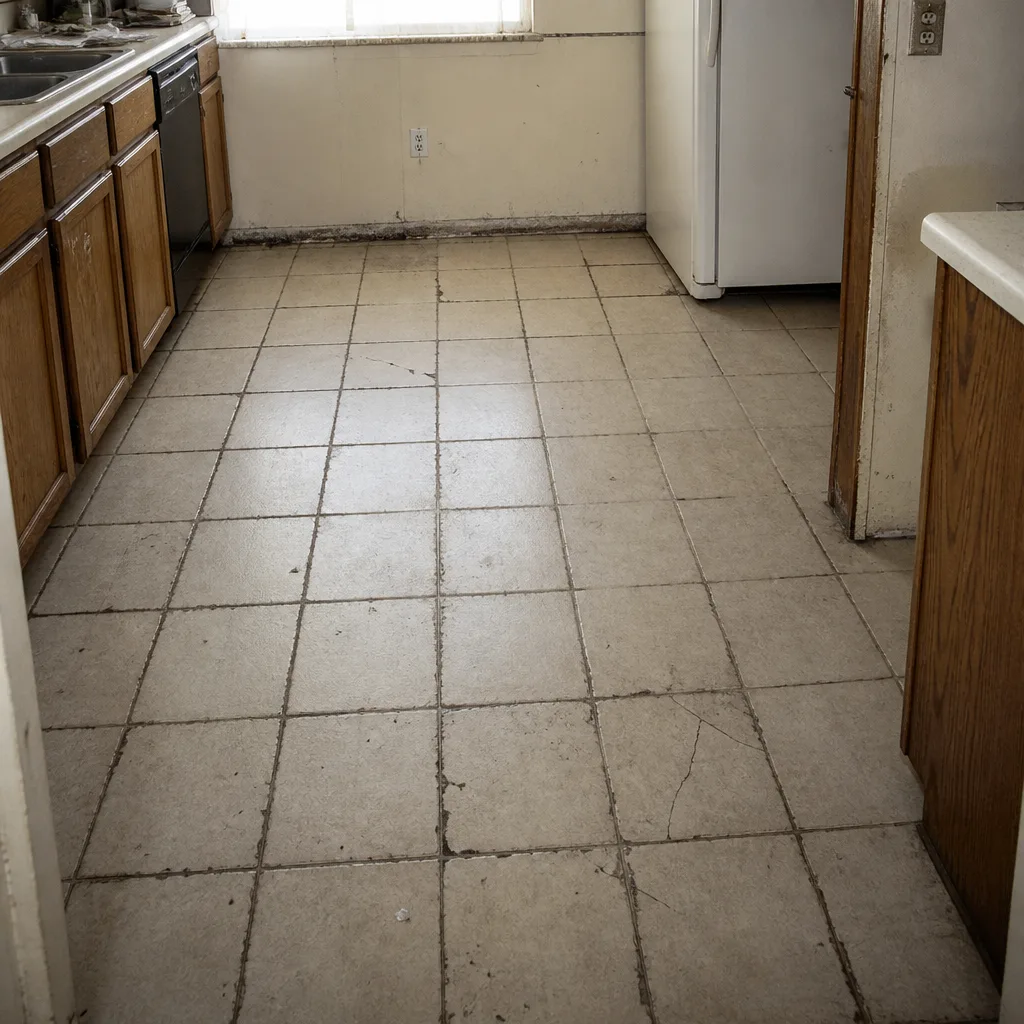
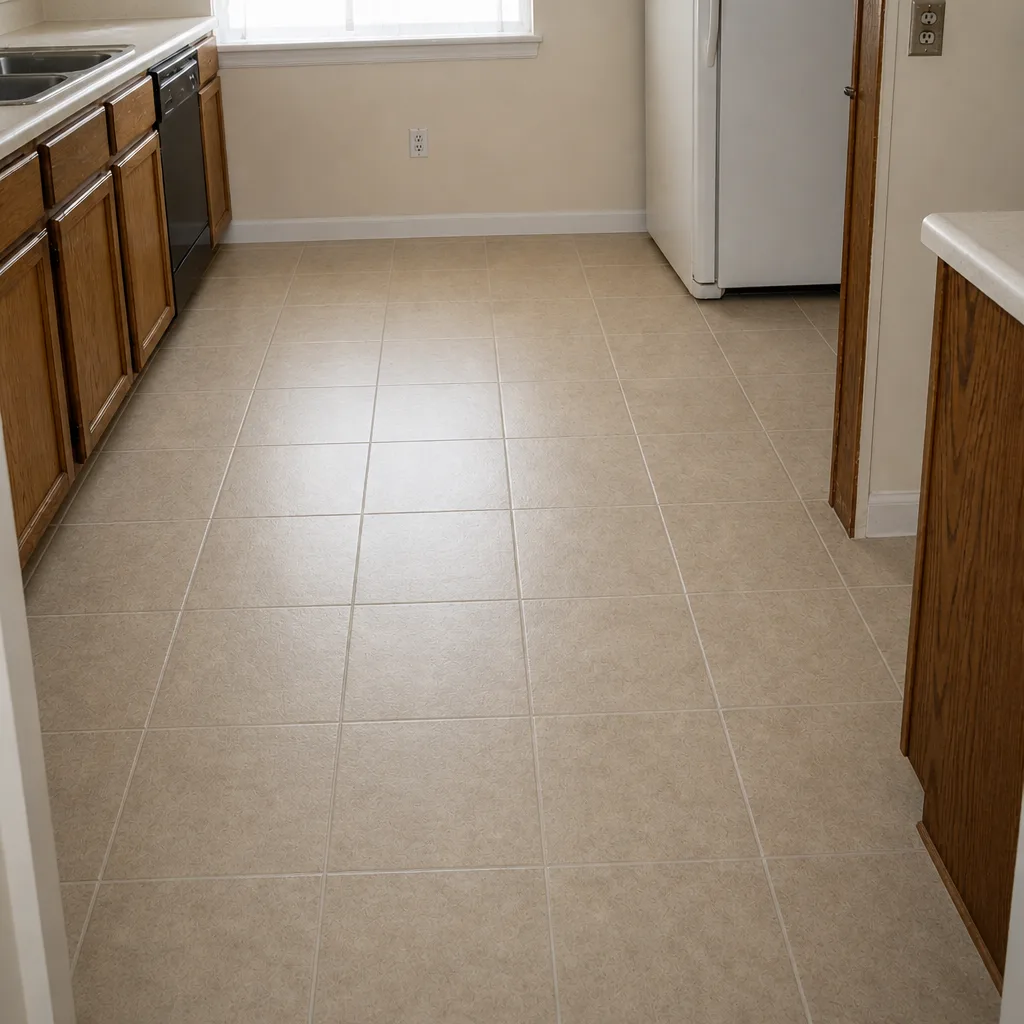
A single cracked or chipped tile is a genuine repair job: pop out the failed piece, set a new one, regrout, and you’re done. The complication is matching. Grout dyes age differently than tile, and any tile still on the shelf today may not quite match a field installed eight or ten years ago. When several tiles have failed in the same area, that pattern usually means something under them is moving. That’s when a tile repair becomes a tile flooring installation decision. Daltile’s line gives us good matching flexibility for common patterns, but even the best catalog can’t fix a spread of grout that’s shifted because the substrate didn’t hold.
Hardwood
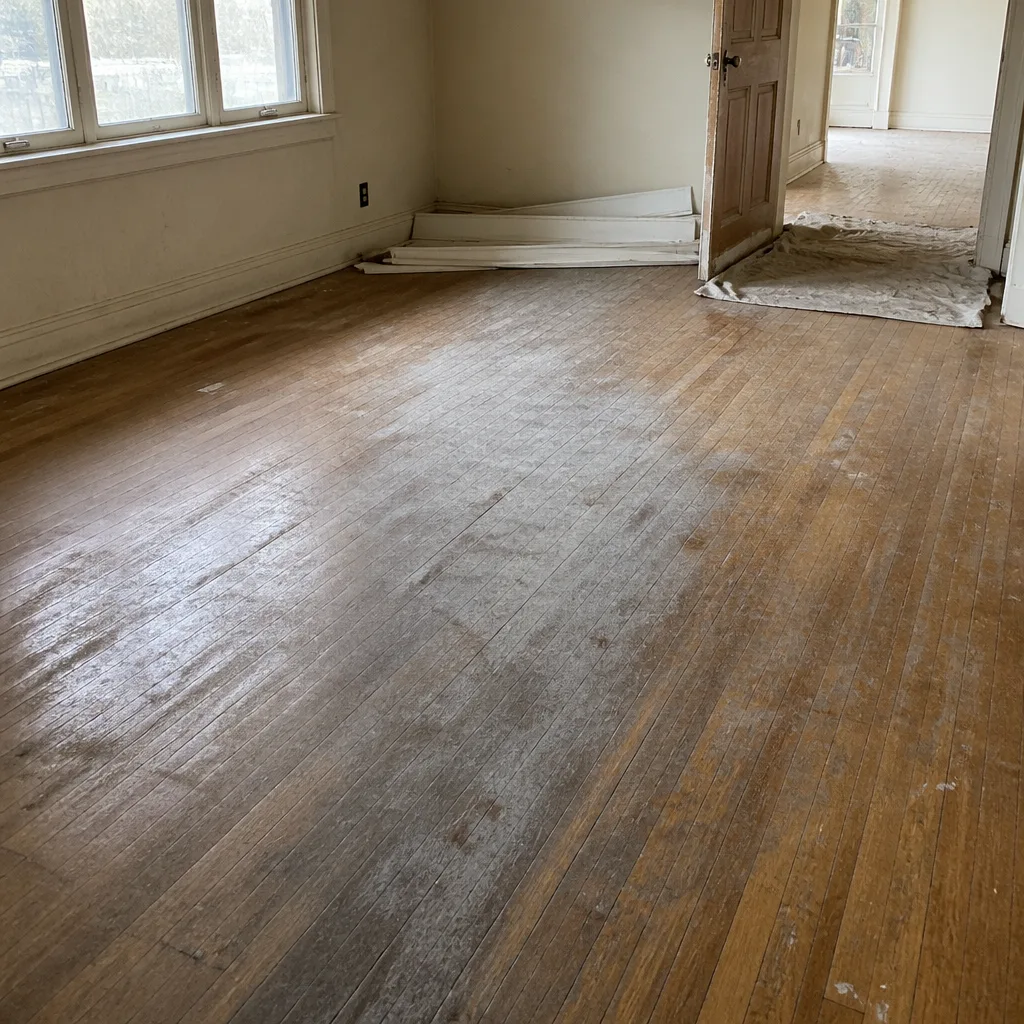
Hardwood is where “repair” often means “refinish.” Surface scratches, worn finish, traffic-zone dulling, and grey or faded patches in sun-exposed rooms can usually be resolved without pulling up a single plank. What can’t be sanded out: deep gouges, water stains that have soaked through the surface grain, and individual boards broken or cupped well past what sanding can flatten. Those are individual-board replacements before a refinish, not instead of one.
Luxury Vinyl Plank
Luxury vinyl plank (LVP) is often the most repair-friendly hard surface because many lines are click-lock, meaning a single damaged plank can be lifted and replaced. COREtec and Karndean both give good repair flexibility when the product is still in production. The catch is matching: LVP is made in dye lots, and the same named color from a different production run can read cool or warm against the original. With a few years on the floor, the installed material has also taken on light wear that a new plank won’t share. Replace a few pieces and you can usually blend. Replace one piece in the middle of the open floor and you often can’t.
Refinish Before You Replace: When Hardwood Makes Sense
If you have solid hardwood or a thick engineered hardwood floor and the problem is the surface rather than the structure, refinishing is the middle path that most homeowners overlook. It’s faster than replacement, easier on the household, and avoids tearing out material that still has years of life. The question is whether the wood has enough left to sand.
Refinishing makes sense when:
- The boards are solid and sound, not spongy or cupped beyond flattening
- The wear is on the surface: scratches, dulling, tired finish, faded stain
- The wood is thick enough to sand without hitting the wear layer or the tongue (thickness and condition get checked at the estimate)
- You like the wood and want it back, not different
- Only a portion of the floor is worn and the rest will come back with the same pass
Refinishing stops making sense when the cumulative wear has already pushed the floor to the end of its refinishing life. Every sanding takes material off the top. A floor that’s been refinished a few times may only have one sanding left in it, and spending that sanding on a room that’s structurally compromised usually wastes it. Patching in a set of replacement boards for the badly damaged sections and then refinishing the whole floor is often the better order of operations, because you get the color match from the finish rather than relying on new boards to blend with old ones.
In Boulder City, wood floors take a beating from dry air and hard summer sun. The dry air isn’t the enemy by itself, but dryness paired with sun through west-facing glass fades exposed areas. Refinishing brings color back to that zone without asking you to rip out a floor that’s fine under the surface.
The Age-and-Equity Calculation: Floor Lifespan and Selling Plans
Flooring is a capital item that ages like everything else in a house. What you’ll do about it depends on how much life is left, and how long you plan to be the one living on it. The exact lifespan depends on the product, how the room is used, and how it was maintained; the product specifications and your written estimate are the places to get real numbers.
What we can say with confidence is how to think about the two scenarios:
- Staying put for a while. A patched or refinished floor is money well spent as long as the result holds up for the next several years. You’re the one benefiting from the remaining life, so it doesn’t matter that the fix isn’t perfect for a future buyer.
- Selling within a few years. The math tilts toward replacement when the floor is visibly worn across the room and a buyer will deduct for it. Buyers see the surface immediately. They don’t care that the subfloor is pristine or that the wear is just cosmetic. A tired-looking floor reads as “needs work” at walkthrough, and that conversation is easier to have before a listing than after.
The variable most people miss is that partial repairs sometimes land in the worst spot: not cheap enough to feel thrifty, and not clean enough to look new. A room with two visible patches may sell worse than a room with one continuous worn floor, because the patches raise the question of what else went wrong. If the goal is resale within five years, a full-surface replacement in the room buyers notice first is usually the more efficient spend. If the goal is comfortable living for the next decade, an honest refinish or targeted repair will hold up.
What a Professional Assessment Should Actually Evaluate
A good estimate visit should be a diagnostic, not a sales call. Any professional quoting a repair or a replacement should be able to walk you through each of the following, on the spot:
- The subfloor. How flat and how solid it is, what it’s made of, and whether moisture or movement is showing through. Checked with a straightedge, foot pressure, and a look at the transitions and base.
- The material identity. The exact product, line, and if possible the dye lot, so the match can be assessed. Unlabeled or discontinued products get flagged before the customer’s expectations get set.
- Sun and traffic patterns. Where light hits, where feet land, and which areas of the room the wear centers on. A room with one sun-blasted wall has a different repair plan than one with evenly distributed wear.
- The install method. Glue-down, floating, nail-down, or staple affects how repairable a section is and how much material has to come up around the repair.
- Life remaining. An honest read on how many years the current floor has in it under its current care.
- Cost of both paths. A repair estimate and a replacement estimate, in writing, side by side. If the shop won’t price both, ask why.
For hardwood, add a probe of wood thickness and an honest statement of whether another sanding pass exists. For tile, add a tap test across the field to find hollow spots before quoting a single-tile replacement. For LVP, add a check that the same production run is still available. Any of these steps skipped is a quote that might be right by accident.
Why a Second Opinion on a Repair-Only Quote Is Worth the Time
If a quote you’ve been given only prices the repair, and it doesn’t mention the subfloor, the product availability, or how the patch will sit against the existing floor, get a second opinion. It costs you a visit, not a dollar, and it forces a fuller diagnosis. The most common shortfall isn’t dishonesty; it’s speed. A repair quote is easy to write in a few minutes. A repair-versus-replace comparison takes time on the floor, and shops under pressure skip it.
The second opinion is also a check on the “replace” quote. Sometimes a full replacement has been prescribed when a refinish would have solved the problem. Hardwood is the most frequent culprit here, because not every shop offers Flooring Boulder City refinishing capability. A shop that only installs will quote install. Ask directly: “Is this floor refinishable, and if so, is that on the table?” If the answer is no, ask why not, specifically. If the reason is thin, keep reading quotes.
Two visits, two comparisons, and you’ll have enough information to make the decision once.
Common Mistakes to Avoid
- Authorizing a repair without identifying the product first. If the shop doesn’t know the make, line, and dye lot, the patch is a gamble. Ask what material they plan to install and confirm it matches before the order goes in.
- Patching over a soft or moving subfloor. The new material will fail within months. Have the subfloor checked as part of the estimate, not after the repair.
- Replacing a floor that could have been refinished. Solid hardwood and thick engineered wood often have another sanding pass available. Before accepting a replacement quote on a wood floor, ask for a refinish quote too.
- Ignoring sun exposure when choosing a color. Boulder City’s west-facing glass pushes furniture-damaging light onto floors, so a color that looks great in the sample can look very different after a summer of sun. Ask about fade behavior across the exact product line.
- Mismatched grout on a small tile repair. New grout on old tile reads as a patch from across the room. Have the shop show you a grout sample against the existing field before accepting the repair plan.
- Deciding before the price of both paths is in front of you. Without a side-by-side written estimate, you’re guessing. Get the repair and the replacement priced in writing before signing anything.
- Ignoring the resale horizon. If you’re selling in the next two years, weigh how the finished surface will read to a buyer, not just how much it costs to fix the damage you can see today.
See the difference
 Before
 After
 Before
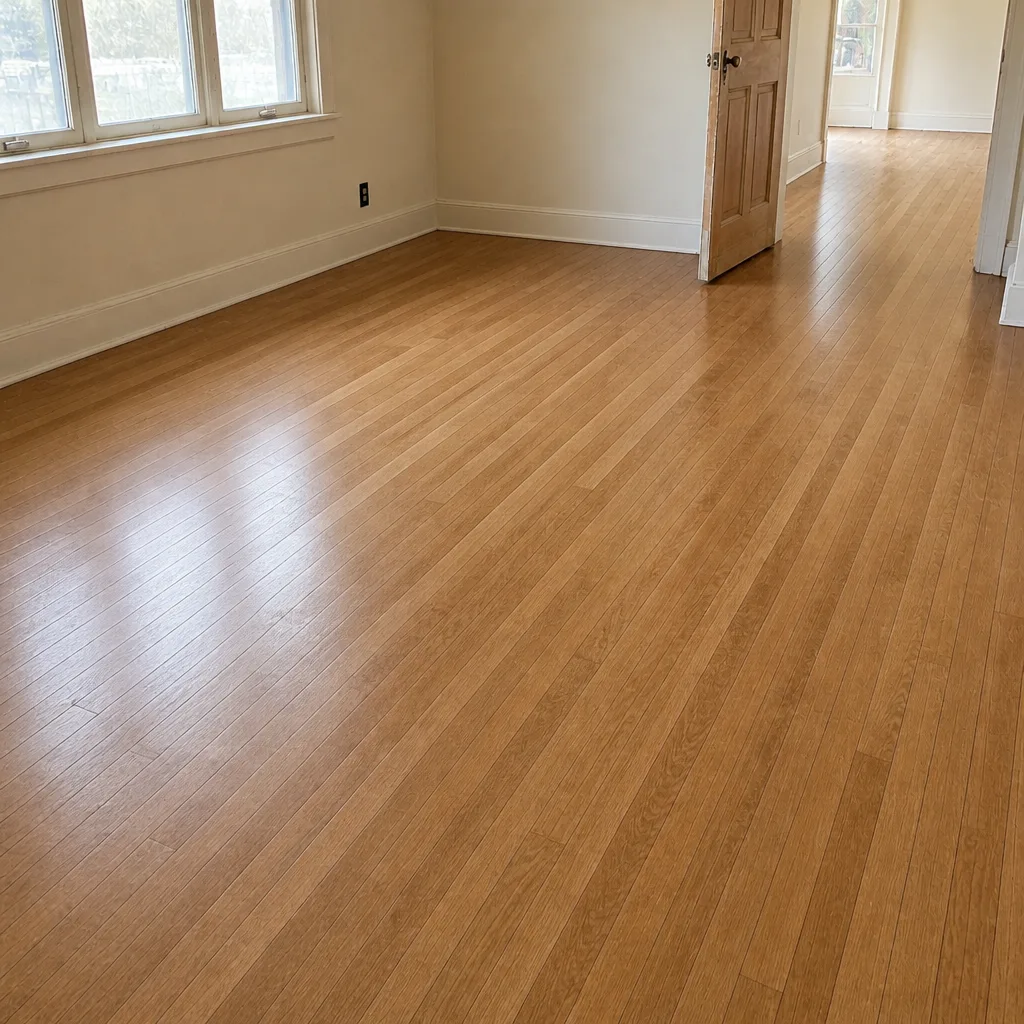 After
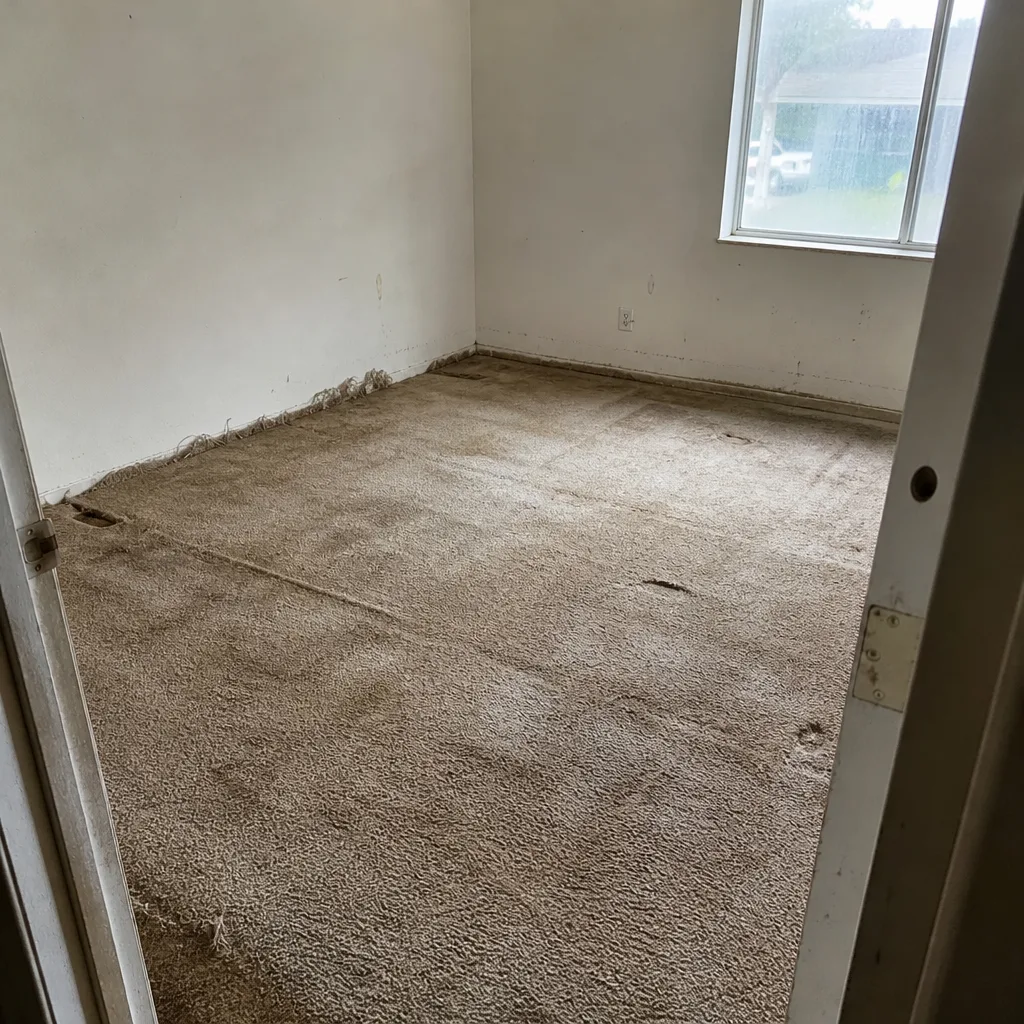 Before
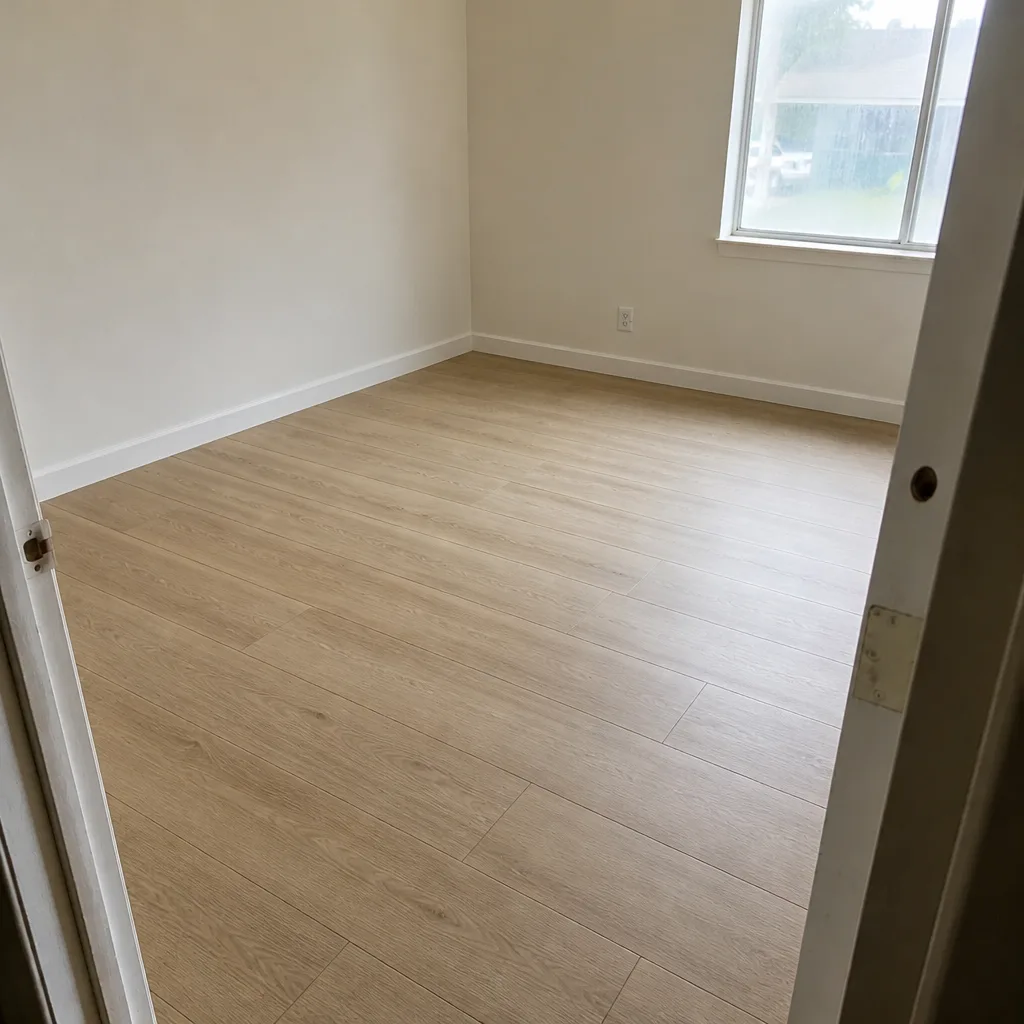 After
When to Call a Professional
Call when the damage is spreading, when the floor feels soft or moves underfoot, when several tiles have cracked in the same area, when a patch would sit somewhere visible and needs an honest match assessment, or when a hardwood floor has worn past what a screen-and-recoat can fix and you want to know whether it can survive a full refinish. Call also when you’re getting ready to list and want a realistic read on whether the floor will cost you at the walkthrough. These are diagnostic decisions, not guesses to make from photos. Flooring Boulder City offers free estimates in Boulder City. Call (833) 842-8455. We answer 24/7. Fast dispatch from 7am to 7pm, Sunday through Friday.
A free estimate means we look at the subfloor, identify the material, price repair and replacement side by side, and give you a written number for each. What it doesn’t mean is a push toward the bigger job. If repair holds up, we’ll tell you so.
Frequently Asked Questions
No. Repair is usually cheaper when the damage is small and the material can be matched, but a small patch on a discontinued product can cost more than replacing the room because the material has to be sourced or the entire field has to shift to a new line for it to look right. The deciding factors are product availability, subfloor condition, and how visible the repaired area will be, not the size of the damage. Call (833) 842-8455 for a free estimate that puts both numbers in writing.
Look for soft spots, a spongy feel underfoot, cupping or crowning across planks, seasonal gaps wider than the rest of the floor, or a dipping slope that wasn’t there before. Any of those suggests the problem is under the surface, which means patching the floor above it will fail. A free estimate in Boulder City includes a subfloor check with a straightedge and a look at the transitions. Call us to schedule.
No. Refinishing depends on the thickness of the wood and its condition. Solid hardwood and thick engineered hardwood usually have at least one sanding pass left, but a floor that has already been refinished multiple times may have exhausted the material available above the tongue. Deep structural damage or water-saturated wood can also rule it out. A pro has to look at the floor in person, which is what our free estimates include. Call (833) 842-8455.
Skipping the side-by-side written estimate. In our experience, most people decide based on one quote for one path, whether that’s a repair-only number or a replacement-only number. That forces a decision without the comparison that actually answers the question. Ask for both, in writing, before authorizing work. Call (833) 842-8455 for both numbers priced side by side.
Yes, substantially. Carpet is the most patchable, but traffic wear across a room often means replacing the whole floor makes more sense than patching one lane. Tile repairs work well on single broken pieces, but a cluster of failed tiles usually means the substrate needs attention. Hardwood often lands on refinishing, not replacement. Luxury vinyl plank is repair-friendly when the same production run is available, and hard to blend when it isn’t. Every one of those paths is priced at the free estimate. Call (833) 842-8455 to book one.
Replace if the floor is worn across the room and a buyer will deduct for it. Repair if the damage is small, focused, and won’t read as a patch at the walkthrough. Buyers see surface-level wear immediately, so the calculation tilts toward the appearance of the whole room, not the size of the damaged area. If you’re not sure which way your floor reads, get a free estimate and ask the question straight. Call (833) 842-8455.
The Bottom Line
The repair-or-replace decision comes down to four variables: whether you can match the product, whether the subfloor is sound, how much life the current floor has in it, and how long you’ll be the one living on it. Repair wins when the damage is small, the match works, and the surface has years left. Replacement wins when the wear is room-wide, the material is gone, or the subfloor needs the floor to come up anyway. Refinishing is the middle path for hardwood, and it’s the one most people skip. See the floor in person, price both paths in writing, and the decision makes itself.
For a free estimate on repair, refinish, or replacement in Boulder City, call (833) 842-8455. We answer 24/7. Fast dispatch from 7am to 7pm, Sunday through Friday. Our technicians have up to 11 years of experience, and we carry carpet, tile, hardwood, and luxury vinyl plank from Shaw, COREtec, Karndean, and the rest of the brands we install, so the right product for your floor is already in the conversation. We’ll look at the subfloor, identify what’s on your floor now, and give you a written estimate for both paths before any decision is made.
Written by the team at Flooring Boulder City.